
Providers / Big Time Gaming / Who Wants to Be a Millionaire Megaways
Who Wants to Be a Millionaire Megaways
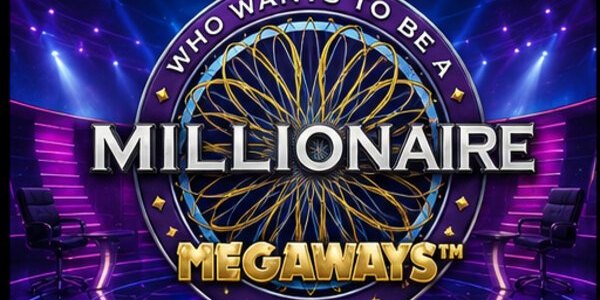
Who Wants to Be a Millionaire Megaways is a slot from Big Time Gaming, a studio known for megaways and megaclusters. Check the stats below, then confirm them in the game's own info screen before you play for real money.
Game facts
Provider: Big Time Gaming
RTP: 96.24%
Volatility: High
Maximum win: Check in-game
Main feature: Megaways
Play responsibly
Operators can run different RTP versions of the same game, so the figure shown in your casino lobby may not match the one above. Always open the in-game info screen and confirm it yourself.
Set a deposit limit before you start and treat any win as a bonus, not an income.
- Provider
- Big Time Gaming
- Default RTP
- 96.24%
- Volatility
- High
- Maximum win
- See in-game info screen
- Core mechanic
- Megaways
IN SHORT
Who Wants to Be a Millionaire Megaways is a high-volatility online slot from Big Time Gaming built on a megaways mechanic. Its standard return to player is 96.24% and the published maximum win is not reliably published.
Operators can deploy reduced return configurations of the same game, so the figure in your casino's information screen is the one that applies to you — not the figure published anywhere else, including here.
- RTP 96.24%
- Max win not reliably published
- Volatility High
- Provider Big Time Gaming
- Mechanic Megaways
- What Who Wants to Be a Millionaire Megaways is
- What a licensed brand means for you
- The Megaways engine here
- Cascades and the free spins multiplier
- Symbols and paytable
- A 96.24% return — below the studio's better titles
- Why we don't publish a max win
- The Millionaire family
- Volatility and session shape
- Stake sizing in practice
- Reading the game rules
- Common misconceptions
- Who this suits
- Where this fits in a session
- What the licence costs you
- FAQ
What Who Wants to Be a Millionaire Megaways is
This is Big Time Gaming's slot adaptation of the television format, built on the studio's Megaways engine. Six reels of variable height, up to 117,649 ways to win, a return of 96.24%, and high volatility.
It is the studio's highest-profile licensed title and the reason branded content appears in our Big Time Gaming list at all. The game show format — a question ladder climbing toward a million — maps onto slot design more naturally than most licences, and the presentation leans on it heavily.
On the numbers it sits toward the bottom of the studio's range, which is the honest headline for this page.
What a licensed brand means for you
The Who Wants to Be a Millionaire format is owned by Sony Pictures Television, having passed from Celador to 2waytraffic and then Sony. That ownership chain matters in three practical ways.
- Availability is restricted. Licensed titles are unavailable in some jurisdictions entirely, regardless of your casino. If you cannot find the game in your lobby, a licensing restriction is the most likely reason rather than anything at your end.
- Games can be withdrawn. When a licence lapses, the title disappears — sometimes permanently. A game vanishing usually reflects a commercial agreement ending.
- Artwork is tightly controlled. Branded assets are the most restricted in any studio's catalogue, which is why you will see fewer promotional materials for this title than for the studio's own IP.
Recognising the format costs nothing and adds nothing to the maths. The licence fee, however, has to come from somewhere — and across the industry branded titles frequently carry slightly weaker returns than a studio's own IP. That pattern holds here: 96.24% against 97.24% on White Rabbit.
The Megaways engine here
Six reels, each independently displaying between two and seven symbols on any given spin, giving a maximum of 117,649 ways to win — 7⁶. The count is recalculated every spin and displayed above the reels.
Wins pay left to right on adjacent reels. And as on every Megaways game: the paytable is scaled to the ways count, so more paths mean each path pays proportionally less. A high ways count is a description of that spin's grid, not an advantage.
Cascades and the free spins multiplier
Winning symbols are removed, new ones cascade in, and if the new arrangement forms a win it pays and the sequence continues.
The studio's standard free spins structure applies: a win multiplier increasing with each cascade and persisting across the round. That structure is what concentrates the game's return in the bonus and makes long rounds worth disproportionately more than short ones.
The game's branded features — whatever this build calls its lifeline or question-ladder mechanics — vary between versions and regional releases, so read your version's rules pages for the specifics rather than trusting a review, including this one.
Symbols and paytable
| Symbol group | Role | Notes |
|---|---|---|
| Branded premium symbols | Top pays | Best combinations across six reels |
| Show-themed mid symbols | Standard pays | Frequent on a high ways count |
| Card ranks | Low pays | Small; most wins sit below stake |
| Wild | Substitutes | Check which reels in your build |
| Scatter | Triggers free spins | Award table is in the rules pages |
A 96.24% return — below the studio's better titles
At 96.24% the house edge is 3.76%. That is around the industry average and below most of the Big Time Gaming range:
| Title | Return | Cost per $1,000 staked |
|---|---|---|
| White Rabbit | 97.24%+ | ~$28 |
| Extra Chilli | 96.82% | ~$32 |
| The Final Countdown | 96.65% | ~$34 |
| Apollo Pays | 96.51% | ~$35 |
| Bonanza | 96.00% | ~$40 |
| Millionaire Megaways | 96.24% | ~$38 |
| Danger High Voltage | 95.67% | ~$43 |
Only Bonanza and Danger High Voltage return less. If you are choosing between this and White Rabbit in the same lobby, the difference is about ten dollars per thousand staked — the price of the licence, effectively.
Reduced configurations circulate industry-wide, so read the figure in the rules pages.
Why we don't publish a max win
Our stat panel shows "check in-game" for the maximum win on this title. That is deliberate.
Big Time Gaming's Millionaire range includes several separate games — the Megaways original, a Megapays jackpot version, Millionaire Mystery Box and Millionaire Rush Megaclusters — and published ceiling figures circulate without consistently identifying which game they belong to. Rather than attach a number to the wrong title, we leave it to the paytable in your build.
What is safe to say: on the standard Megaways structure with a persistent cascade multiplier, the ceiling will be substantial and reached only through a long retriggering round. As always, a maximum win figure describes the far tail rather than an outcome to plan for.
The Millionaire family
- Who Wants to Be a Millionaire Megaways — this game, the Megaways original at 96.24%.
- Millionaire Megapays — adds a progressive jackpot layer. Part of every bet funds the pool, so the ordinary-play return is lower than the headline figure suggests.
- Millionaire Mystery Box — reported around 96.36%, a different structure.
- Millionaire Rush Megaclusters — reported around 96.44%, using the Megaclusters splitting grid rather than Megaways.
These are genuinely different games sharing branding. Check which one is in your lobby, particularly with the Megapays version, where the jackpot contribution changes what you are buying with each spin.
Volatility and session shape
High volatility with the standard unlimited-multiplier profile: a thin base game, an infrequent bonus, and a round whose value depends on running long.
Expect cascades keeping the screen active while the balance drifts down, with most triggered rounds ending below the cost of reaching them. The branded presentation — the music stings, the question-ladder framing — is designed to make each round feel more consequential than the maths warrants, which is worth noticing rather than being cynical about.
Stake sizing in practice
- Read the total bet field before your first spin.
- Budget for at least 300 spins, as on any unlimited-multiplier Megaways game.
- Given the below-average return for this studio, keep sessions shorter here than on White Rabbit or Extra Chilli.
- Do not raise stakes after a drought — the multiplier resets every round and nothing accumulates.
- Take a large result off the table.
Reading the game rules
- The return figure — 96.24% is standard; reduced builds exist.
- The maximum win, since we deliberately do not publish one for this title.
- The free spins multiplier rule — whether it persists across the round.
- The retrigger condition.
- Which Millionaire game you have opened, since the family shares artwork and the Megapays version carries a jackpot contribution.
Common misconceptions
The first is that a familiar brand indicates a better game. Across the industry, branded titles frequently return slightly less than a studio's own IP because the licence has to be paid for. This game is a clear example within its own catalogue.
The second is that 117,649 ways improves your chances. The paytable is scaled to the ways count; the return is unaffected.
The third is treating the Millionaire titles as one game. Four separate releases share the branding with different engines, returns and jackpot structures.
Who this suits
This suits a player who genuinely enjoys the format and wants a competent Megaways game wearing it. The engine is the studio's proven one and the presentation is well executed.
It suits less well anyone choosing on value. At 96.24% you are paying roughly ten dollars more per thousand staked than on White Rabbit in the same lobby, for the same underlying mechanic and a smaller edge in your favour. If the brand is not the draw, one of the studio's own titles is the better bet.
FAQ
What is the RTP?
96.24% as standard, which is below most of the Big Time Gaming range. Confirm the figure in your casino's game rules.
What is the maximum win?
We do not publish one, because ceiling figures circulate without reliably identifying which Millionaire title they belong to. Read the figure in your build's paytable.
Why can't I find the game at my casino?
Licensed titles carry jurisdiction restrictions and can be withdrawn when agreements lapse. It is a licensing matter rather than a fault at your end.
Is the Megapays version the same game?
No. It adds a progressive jackpot, which means part of every bet funds the pool and your ordinary-play return is lower than the headline figure.
Does the brand make it a better slot?
No. It makes it recognisable. The licence cost is reflected in a return below the studio's own titles.
Where this fits in a session
The honest position: play this one because you like the format. It is a competent Megaways game and the presentation is well done, but nothing about the maths recommends it over the studio's own titles.
If you do play it, budget for several hundred spins at a small stake and keep the session shorter than you would on a better-returning game — the extra percentage point compounds against you across turnover.
Before you start, check which Millionaire title your lobby has actually loaded. The family shares artwork closely, and the Megapays version diverts part of every bet into a jackpot pool, which changes what you are buying per spin.
What the licence costs you
It is worth putting a number on the branded-title pattern, because it is consistent enough across the industry to be useful.
| Spins at $0.50 | Turnover | This game (96.24%) | White Rabbit (97.24%) | Difference |
|---|---|---|---|---|
| 500 | $250 | ~$9.40 | ~$6.90 | ~$2.50 |
| 2,000 | $1,000 | ~$37.60 | ~$27.60 | ~$10 |
| 10,000 | $5,000 | ~$188 | ~$138 | ~$50 |
Fifty dollars per $5,000 staked, for the same underlying Megaways engine from the same studio. That is the price of the licence, and whether it is worth paying depends entirely on how much the format adds to your enjoyment.
The wider lesson generalises across this site: branded slots — film, television, music, sports — frequently return slightly less than a studio's own intellectual property, because somebody has to pay the rights holder. If you notice yourself gravitating toward familiar names in a lobby, it is worth checking the return figure before the theme decides for you.
Read the return figure and the maximum win in the game rules, confirm which Millionaire title you have opened, budget for several hundred spins, and set a deposit limit first. This page is information, not a recommendation to play.