Providers / Games Global / Mega Moolah
Mega Moolah
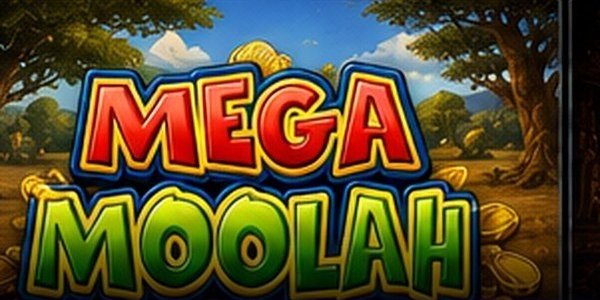
Mega Moolah is a slot from Games Global, a studio known for progressive jackpots and legacy feature slots. Check the stats below, then confirm them in the game's own info screen before you play for real money.
Game facts
Provider: Games Global
RTP: 88.12%
Volatility: Medium
Maximum win: Check in-game
Main feature: Progressive jackpot
Play responsibly
Operators can run different RTP versions of the same game, so the figure shown in your casino lobby may not match the one above. Always open the in-game info screen and confirm it yourself.
Set a deposit limit before you start and treat any win as a bonus, not an income.
- Provider
- Games Global
- Default RTP
- 88.12%
- Volatility
- Medium
- Maximum win
- See in-game info screen
- Core mechanic
- Progressive jackpot
- What Mega Moolah is
- 88.12% — read this before anything else
- Where the missing 8% goes
- The four jackpot tiers
- How the jackpot wheel works
- The odds, honestly
- The base game
- Why we don't publish a max win
- Stake and jackpot eligibility
- Treat it as a lottery ticket
- Stake sizing in practice
- If you want value instead
- Common misconceptions
- Who this suits
- FAQ
What Mega Moolah is
Mega Moolah is the 2006 African safari progressive from Games Global — released under the Microgaming name — and it is the most famous jackpot slot ever made. It holds the Guinness record for the largest online slot payout, and its Mega jackpot has produced multiple eight-figure wins.
Five reels, three rows, 25 paylines, and a base return to player of 88.12%.
That number is not a typo, and it is the most important thing on this page.
88.12% — read this before anything else
A return of 88.12% means a house edge of 11.88%. Set against the games we cover elsewhere on this site:
| Game | Return | House edge | Cost per $1,000 staked |
|---|---|---|---|
| Immortal Romance | 96.86% | 3.14% | ~$31 |
| Thunderstruck II | 96.65% | 3.35% | ~$34 |
| Break da Bank Again | 95.43% | 4.57% | ~$46 |
| Mega Moolah | 88.12% | 11.88% | ~$119 |
Staking $1,000 on Immortal Romance costs about $31 in expectation. The same turnover on Mega Moolah costs about $119 — nearly four times as much. That is the price of a ticket to the jackpot, and almost nobody who plays this game knows they are paying it.
Every other game we cover sits between 95% and 98%. Mega Moolah is nearly seven points below the next lowest. If you take one thing from this page: you are not playing a slot with a jackpot attached, you are buying lottery tickets with a slot wrapped around them.
Where the missing 8% goes
The gap is not the operator pocketing more. A slice of every bet is diverted into the progressive jackpot pools, and those pools pay out to exactly one player, eventually, somewhere in the world.
So the money is returned to players in aggregate — it is simply returned to one player at a time rather than distributed across everyone. From your seat, the practical effect is that ordinary play returns about 88 cents per dollar instead of 96, and the difference is sitting in a pot you will almost certainly never win.
That is how every progressive works. Mega Moolah is unusual only in how large the diversion is: Divine Fortune publishes 96.59% including its jackpot contribution, which means its diversion is a fraction of the size.
The four jackpot tiers
| Tier | Character |
|---|---|
| Mini | Smallest, hit most often, typically a modest cash amount |
| Minor | Second tier, still small relative to the headline |
| Major | Meaningful but far below the Mega |
| Mega | The headline progressive, seeded at €1,000,000 and growing until won |
The Mega is a network-wide pool shared across every casino running the game, which is why it grows so fast and reaches such extreme figures. The record stands at around €19.4 million, and the average Mega payout has been reported above €5 million.
The Mega is also seeded at one million, meaning it never starts from zero — the smallest possible Mega win is still seven figures.
How the jackpot wheel works
The jackpot is not triggered by symbols. At random, on any spin, the Jackpot Wheel appears. You spin it, and where it stops determines which of the four tiers you win.
Two consequences follow, and both matter.
First, nothing you do affects the trigger. No symbol combination, no feature, no strategy. It is a random event weighted by your stake.
Second, reaching the wheel is not the same as winning the Mega. The wheel is segmented heavily toward the Mini and Minor tiers. Most players who reach it — already a rare event — win a modest amount and are surprised that the experience was not life-changing.
The odds, honestly
Games Global does not publish the exact probability of the Mega, and any site quoting a precise figure is guessing. What can be said from the structure:
- The wheel triggers rarely, and is weighted by stake — larger bets mean a higher chance of the wheel appearing.
- Reaching the wheel most likely awards the Mini or Minor.
- The Mega has been won a few dozen times in roughly two decades, against an enormous volume of spins worldwide.
The honest framing: the Mega is a lottery-scale event. It has genuinely made people millionaires, and your realistic chance of being one of them in any given session is negligible. Both of those things are true at once, and the marketing only ever tells you the first.
The base game
Deliberately simple. A lion wild that doubles any win it completes, a monkey scatter awarding 15 free spins with a 3x multiplier, and standard safari symbols across 25 paylines.
By 2006 standards this was reasonable. By modern standards it is thin — no cascades, no expanding symbols, no multiplier progression, no bonus buy. The game has aged, and it has not needed to age well because nobody plays it for the base game.
At 88.12%, the base game is also where you feel the missing return. Sessions run down noticeably faster than on a 96% game at the same stake, and that is exactly what the arithmetic predicts.
Why we don't publish a max win
Our stat panel shows "check in-game" for the maximum win, which is deliberate.
On a fixed-payout slot the maximum is a stake multiple. On a progressive, the top prize is a pooled cash amount that changes continuously — there is no honest multiple to publish. Some sites quote 10,000x for this game; that figure does not describe the Mega, which is a cash pool and could be worth two million or nineteen.
The non-jackpot ceiling — what the ordinary maths can pay without the wheel — is modest, in line with a simple 25-line slot from 2006.
Stake and jackpot eligibility
Stakes run from around $0.01 to $6.25 per spin depending on the build, and the game is unusual in that every stake is eligible for every jackpot tier. There is no minimum qualifying bet.
That is genuinely player-friendly and worth knowing, because many progressives require a maximum bet for the top tier. Several of the record Mega Moolah wins were struck at very small stakes.
The trade-off: your chance of the wheel appearing scales with stake. Betting more does not unlock a prize category, it increases the frequency of the trigger — while also increasing how much that 11.88% edge costs you per spin.
Treat it as a lottery ticket
The framing that makes this game make sense is not "slot with a jackpot" but "lottery with entertainment attached".
Nobody buys a lottery ticket expecting a return. They buy the possibility, knowing the expected value is poor, and they budget a fixed small amount. Applied here: decide a small sum you are content to lose, play it at a low stake, and stop when it is gone. Do not treat a losing session as a run of bad luck to be recovered, because at 88.12% the losses are structural rather than circumstantial.
What does not work is playing Mega Moolah as your main game. An 11.88% edge across a long session is punishing in a way that no amount of jackpot hope offsets.
Stake sizing in practice
- Decide a fixed small budget before you start and treat it as spent.
- Play at a low stake. Every stake qualifies for every tier, so betting large buys frequency, not access.
- Budget in spins, and expect the balance to fall faster than on a 96% game — that is the arithmetic, not variance.
- Do not chase. There is no recovery path at this house edge.
- If you want a long session, play something else and reserve a small amount for this.
If you want value instead
- Immortal Romance at 96.86% — the same studio's best everyday return, with genuine feature depth.
- Thunderstruck II at 96.65% — a long-session game with four progressive bonus tiers.
- Divine Fortune at 96.59% — a progressive that keeps its return respectable because the jackpot diversion is far smaller.
That last comparison is the useful one. If you want a jackpot without an 11.88% edge, progressives exist that charge far less for the privilege — the prizes are smaller, which is precisely why.
Common misconceptions
The first is that a jackpot which has not paid recently is "due". Progressive triggers are random and independent of how long the pot has grown. A large Mega is a bigger prize, not a closer one.
The second is that reaching the wheel means winning big. The wheel is weighted heavily toward Mini and Minor.
The third is comparing 88.12% to other games' RTP as though they measure the same thing. They do — that is the point. The gap is real money and it is charged on every spin.
Who this suits
This suits someone who wants a genuine shot at a life-changing sum, understands the price, and has budgeted a small fixed amount for it. On those terms it is a legitimate purchase — the jackpots are real, they have been paid, and small stakes qualify.
It suits nobody playing for value, session length or entertainment mechanics. At 88.12% with a 2006 feature set, there is no argument for this game other than the jackpot. If the jackpot is not why you are here, there is no reason to be here.
FAQ
Why is the RTP only 88.12%?
Because a large slice of every bet funds the progressive pools. That money returns to players, but to one winner at a time rather than across everyone.
Do I need to bet maximum for the Mega?
No. Every stake qualifies for every tier, which is unusual among progressives. Larger stakes increase how often the wheel appears, not which prizes you can win.
How is the jackpot triggered?
Randomly on any spin, with no symbol combination involved. The Jackpot Wheel then determines which of the four tiers you receive.
What is the biggest Mega Moolah win?
Around €19.4 million, and the average Mega payout has been reported above €5 million. The Mega is seeded at €1,000,000, so it never starts from zero.
What is the maximum win?
There is no honest stake multiple — the top prize is a pooled cash amount that changes constantly. Figures like 10,000x quoted elsewhere do not describe the Mega.
Understand that the 88.12% return is the lowest on this site and costs roughly $119 per $1,000 staked. Budget a small fixed amount, play at a low stake since all stakes qualify, and set a deposit limit first. This page is information, not a recommendation to play.
Other Games Global slots
 Chamber of Spins
Immortal Romance
Games Global
 Great Hall of Spins
Thunderstruck II
Games Global
 Multiplier wilds
Break da Bank Again
Games Global
 Quest bonus
Avalon II
Games Global