Providers / Play'n GO / Legacy of Dead
Legacy of Dead
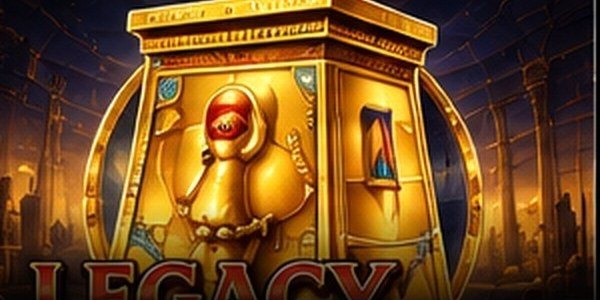
Legacy of Dead is a slot from Play'n GO, a studio known for book-of expanding symbols and cascading grids. Check the stats below, then confirm them in the game's own info screen before you play for real money.
Game facts
Provider: Play'n GO
RTP: 96.58%
Volatility: High
Maximum win: 5,000x
Main feature: Expanding symbol
Play responsibly
Operators can run different RTP versions of the same game, so the figure shown in your casino lobby may not match the one above. Always open the in-game info screen and confirm it yourself.
Set a deposit limit before you start and treat any win as a bonus, not an income.
- Provider
- Play'n GO
- Default RTP
- 96.58%
- Volatility
- High
- Maximum win
- 5,000x
- Core mechanic
- Expanding symbol
IN SHORT
Legacy of Dead is a high-volatility online slot from Play'n GO built on a expanding symbol mechanic. Its standard return to player is 96.58% and the published maximum win is 5,000x.
Operators can deploy reduced return configurations of the same game, so the figure in your casino's information screen is the one that applies to you — not the figure published anywhere else, including here.
- RTP 96.58%
- Max win 5,000x
- Volatility High
- Provider Play'n GO
- Mechanic Expanding symbol
- What Legacy of Dead is
- Why it beats Book of Dead on paper
- Grid, lines and base game
- Free spins and the expanding symbol
- Retriggers and stacked symbols
- Symbols and paytable
- RTP configurations
- Reading the info screen
- Volatility and the 5,000x cap
- Stake sizing in practice
- The Dead family compared
- Common misconceptions
- Who this suits
- Where this fits in a session
- What the numbers mean
- FAQ
What Legacy of Dead is
Legacy of Dead is Play'n GO's 2020 Egyptian slot and, mechanically, a direct descendant of Book of Dead. Five reels, three rows, ten paylines, and a free spins round where one randomly selected symbol expands to fill reels and pays from any position.
Its default return is 96.58%, volatility is high, and the maximum win is 5,000x your stake. It is the same engine as its famous predecessor with a slightly better default figure and a marginally different symbol structure.
If you like the Book format, this is the version to look for. If the Book format frustrates you, nothing here will change your mind — the bonus is just as binary.
Why it beats Book of Dead on paper
The comparison is worth making directly, because these two games sit side by side in most lobbies and one is measurably better.
| Legacy of Dead | Book of Dead | |
|---|---|---|
| Default return | 96.58% | 96.21% |
| House edge (default) | 3.42% | 3.79% |
| Cost per $1,000 staked | ~$34 | ~$38 |
| Grid and lines | 5x3, 10 lines | 5x3, 10 lines |
| Free spins | 10, expanding symbol | 10, expanding symbol |
| Maximum win | 5,000x | 5,000x |
Same grid, same bonus structure, same ceiling, better default return. On the default builds, Legacy of Dead is simply the better bet.
A Legacy of Dead running on a reduced configuration is worse than a Book of Dead running on its default. The comparison above only holds when both are on default settings — which is why the info-screen check beats any comparison table, including this one.
Grid, lines and base game
Five reels, three rows, ten paylines which are adjustable. As on all Book-engine games, reducing the line count lowers your stake but also cuts your chance of landing the scatter trigger — lower the coin value instead and keep all ten active.
The base game is plain by design: left-to-right line wins, a symbol that acts as both wild and scatter, and nothing that accumulates. Most spins produce nothing or less than the stake. The base game funds the bonus, and that is its entire job.
Free spins and the expanding symbol
Landing three or more scatters awards ten free spins. At the start of the round, one symbol is chosen at random to become the special expanding symbol.
During the round that symbol pays in any position rather than only on a payline, and it expands to fill its entire reel when enough copies land. Everything about the round's value comes down to which symbol was drawn.
Draw a high-value character and a good sequence produces a serious result. Draw a card rank and the round is close to worthless regardless of how it runs. There is no multiplier that builds, no consolation mechanic, and no way to influence the selection.
Retriggers and stacked symbols
Landing three or more scatters during the free spins retriggers the round with a fresh symbol selection. That is the mechanic worth understanding, because it is the route to the ceiling.
A retrigger gives you a second draw at the symbol lottery. A round that started with a low-value selection can become a good one if it retriggers into a premium symbol, and consecutive retriggers with strong symbols are how the 5,000x figure is reached.
Because retriggers require the same three-scatter combination that triggered the round in the first place, they are uncommon. Most rounds are ten spins and done.
Symbols and paytable
| Symbol | Role | Notes |
|---|---|---|
| Pharaoh / high characters | Top paying symbols | The selections you want in free spins |
| Egyptian gods and artefacts | Premium symbols | Strong expanding candidates |
| Card ranks A, K, Q, J, 10 | Low pays | A dead round if drawn as the special symbol |
| Book symbol | Wild and scatter | Three or more awards 10 free spins |
All payouts are per line against your total bet across the ten lines.
RTP configurations
The default is 96.58%. Play'n GO supplies five configurations per title, with documented tiers on sibling games running approximately 96%, 94%, 91%, 87% and 84%. Industry analysis puts the studio's average deployed return well below its defaults, so reduced builds are common rather than rare.
At the bottom tier the house edge is more than four times the default. The artwork, the ten lines, the expanding symbol and the 5,000x cap are identical across every version.
Reading the info screen
- Open the menu icon in the game interface.
- Go to the game information or rules pages — usually the last page of the paytable on Play'n GO titles.
- Find the theoretical return to player line and read the percentage.
- If it reads 96.58%, you have the default. Anything materially lower means a reduced build, and the same game is available elsewhere on better terms.
While you are in there, confirm the retrigger rules and whether your build awards a fresh symbol selection on retrigger, since that detail varies across the family.
Volatility and the 5,000x cap
High volatility with the characteristic Book-engine shape: a thin base game, an infrequent bonus, and a bonus whose value is decided by a single random draw.
Expect long stretches where the balance drifts down through small line wins, punctuated by free spins rounds that mostly return modest amounts. The 5,000x maximum requires retriggers landing premium symbols in sequence, which is rare enough to treat as a story rather than a target. Rounds above 100x are notable on this game.
Budget accordingly: on a Book-engine game, a session that does not reach the bonus has experienced almost none of the game's return.
Stake sizing in practice
- Stakes run from around $0.10 to $100 per spin, built from coin value and bet level across ten lines. Read the total bet field.
- Budget for at least 200 spins. Book-engine bonus frequencies typically sit around one in 150 to 200 spins.
- Keep all ten lines active; reduce the coin value if you need a smaller stake.
- There is no feature buy, so the bonus can only be waited for — a short session may see none.
- Check the return figure before your first spin. It is worth more than any staking decision on this title.
The Dead family compared
- Book of Dead — the original and most widely deployed, at a 96.21% default.
- Legacy of Dead — this game, same engine at 96.58% default. The better bet at default settings.
- Rise of Dead, Doom of Dead, Cat Wilde series — further variations on the same skeleton with their own default figures worth checking individually.
- Reactoonz — the Play'n GO alternative with no gated bonus at all, if the waiting is the problem rather than the theme.
Within the family the differences are almost entirely in the default return and small symbol-weighting changes. Compare the numbers, not the artwork.
Common misconceptions
The first is that a longer dry spell brings the scatter closer. It does not — trigger probability is identical on every spin, and a three-hundred-spin drought on a game averaging around one bonus in 175 spins is entirely unremarkable.
The second is that the expanding symbol can be influenced by stake, timing or spin speed. It is a weighted random draw at the start of the round and nothing you do touches it.
The third is assuming the newer game must be better in every respect. It has a higher default return, which is real, but it is the same binary bonus with the same ceiling. Newer does not mean gentler here.
Who this suits
This suits a player who likes the Book format and wants the better-paying version of it, with a bankroll sized for a couple of hundred spins and the patience for a bonus that is often disappointing. On the 96.58% build it is the strongest of the Book-engine games in this catalogue.
It suits nobody who found Book of Dead's dead rounds frustrating, because the structure is identical. And it suits nobody playing without checking the configuration — on a reduced build the advantage over its predecessor disappears entirely and then some.
FAQ
Is Legacy of Dead better than Book of Dead?
On default settings, yes — 96.58% against 96.21% for the same grid, same bonus and same 5,000x ceiling. On reduced builds the comparison collapses, so check both in-game.
How do you trigger the free spins?
Land three or more Book scatters. That awards ten free spins with one randomly selected expanding symbol.
Do retriggers give a new symbol?
On the standard build, yes — a retrigger draws a fresh special symbol, which is why consecutive retriggers are the route to the ceiling. Confirm in your build's rules.
What is the maximum win?
5,000x your stake, requiring retriggers landing premium expanding symbols in sequence.
Is the RTP always 96.58%?
No. Play'n GO supplies five configurations per game, with tiers documented down to around 84% on sibling titles. The info screen is the only authority.
Where this fits in a session
Legacy of Dead is the game to reach for if you specifically want the Book format and want it on the best available maths. Its role is short deliberate bursts on a decided budget rather than a long grind — the bonus frequency and the binary symbol draw mean a long session is mostly base-game spins with a couple of coin flips in the middle.
A pattern that works: decide a spin count, keep all ten lines active at the smallest coin value your budget tolerates, and stop when the count is done regardless of whether a bonus landed. What does not work is depositing again because the round you finally reached drew a card symbol. That outcome is the most common one, not bad luck, and chasing it is how a planned session becomes an unplanned one.
What the numbers mean in practice
Putting the figures together on the default build: a 3.42% house edge, a bonus roughly once every 150 to 200 spins, and a round whose value is decided by one weighted draw across a symbol set where most outcomes are mediocre.
At $0.50 a spin, reaching one bonus costs somewhere around $75 to $100 in turnover. Most of those bonuses will return less than that. The rounds that pay properly are the ones drawing a premium symbol with a retrigger behind it, and those are the sessions people remember and talk about.
None of this makes the game bad — it is a well-built slot with an above-average return for its family. It does mean the honest expectation for any single session is a loss, and the game is worth playing only if the ten spins of anticipation are what you are buying.
Open the info screen and confirm the return figure before your first spin, keep all ten lines active, budget for 200 spins, and set a deposit limit first. This page is information, not a recommendation to play.