Providers / Playtech
Playtech
One of the largest suppliers in the industry, with a catalogue spanning licensed comics, jackpots and table-style games.
IN SHORT
Playtech is a slot studio known for age of the gods jackpots and licensed titles. Across the 10 titles covered here, standard return figures run 95.96%–95.96%, with volatility rated high, medium.
Return percentages are the studio's default configurations. Most large suppliers ship several reduced versions of the same game to operators, so always confirm the figure in the game's own information screen before playing.
- Games covered 10
- RTP range 95.96%–95.96%
- Known for Age of the Gods jackpots and licensed titles
- Who Playtech are
- A platform company, not a studio
- The studios inside Playtech
- Age of the Gods and the jackpot networks
- Signature mechanics
- Licensed brands and expiry
- RTP configurations and jackpot funding
- Catalogue map
- Volatility profile
- Reading a Playtech info screen
- Where Playtech fits in a session
- Strengths and weaknesses
- Live casino, arcade and the wider catalogue
- Playing a fifteen-year-old slot in 2026
- FAQ
Who Playtech are
Playtech is the oldest and largest company on this list by some distance. Founded in 1999 in Estonia and now listed on the London Stock Exchange, it is a publicly traded technology group rather than a boutique game developer, with thousands of staff across dozens of offices and a business that spans slots, live casino, bingo, poker, sports betting technology and the platforms operators run their whole casinos on.
That breadth matters when you are reading a lobby. "Playtech" on a provider filter can mean a 2010 payline slot, a 2026 release from an internal studio, a licensed television tie-in, or a game built by a company Playtech acquired years ago and still operates as a separate brand. There is no single house style, because there is no single house.
Being listed also has a practical consequence worth noting: Playtech publishes annual reports and is answerable to shareholders and regulators in a way private studios are not. Its compliance posture tends to be conservative, and it holds licences across a very large number of regulated markets.
A platform company, not a studio
Playtech's core commercial product is infrastructure. Operators license its platform, its player account management, its bonusing engine and its content aggregation, then plug in games from Playtech and from third parties.
Two things follow that are worth knowing as a player:
- A "Playtech casino" is often a whole operation built on Playtech technology, not just a lobby containing Playtech slots. The bonus terms, the wagering calculations and the responsible-gambling controls you interact with may all be Playtech systems.
- Content and platform decisions are separate. An operator can run Playtech's platform and stock very few Playtech games, or the reverse. The provider filter tells you about the games, not about who built the casino.
This is also why Playtech games frequently have deeper responsible-gambling tooling than boutique titles — reality checks, session timers and loss limits are platform features the company has had to build for regulated markets.
The studios inside Playtech
Playtech has grown substantially by acquisition, and the studios it owns continue to release under their own names. Quickspin, which we list separately on this site, was bought in 2016 and still operates as its own brand with its own design language. Other internal and acquired studios — names like Ash Gaming, Rarestone and several regional teams — appear in game credits.
Practically, this means the sibling relationship between Playtech and Quickspin explains something you may have noticed in lobbies: two providers with completely different styles appearing in the same operator's catalogue through the same commercial arrangement.
When you open a game filtered under Playtech, the studio credit in the info screen tells you which team built it, and that is usually a better predictor of how it plays than the group name.
Age of the Gods and the jackpot networks
Playtech runs some of the longest-established progressive jackpot networks in online casino, and the Age of the Gods series is the flagship. Multiple games feed shared pools with tiered prizes, entered through a separate jackpot bonus rather than won on the reels.
The economics are the same as every progressive and they are worth restating because Playtech's jackpot marketing is prominent:
- A portion of every bet funds the pool, so a jackpot-linked game returns less in ordinary play than its headline figure suggests.
- The published return percentage usually includes the jackpot contribution — money that goes to one eventual winner rather than into your session.
- Jackpot entry is typically random, and on some titles your stake affects qualification. Read the jackpot rules page before choosing a bet size.
They are not slots with a bonus attached; they are slots with part of the return diverted into a lottery. If the jackpot is what you want, play it deliberately at a stake you had already decided on. If you want playing time, a non-jackpot title at the same nominal return will give you more of it.
Signature mechanics
High payline counts
Buffalo Blitz runs 4,096 ways to win across a six-reel, four-row grid — a pre-Megaways approach to the same idea of maximising win paths. Great Blue and other older titles use conventional but generous payline structures.
Cash Collect and symbol collection
Playtech's most-reused modern mechanic. Symbols carry cash values, and a collector symbol sweeps them up when it lands. It is the same family as hold-and-win designs and it produces steadier, more legible outcomes than multiplier-chase mechanics.
Pick-and-click bonuses
Older Playtech titles lean heavily on interactive bonus rounds — pick a chest, choose a door, spin a wheel. Gladiator and Halloween Fortune are built around them. The choices are cosmetic in terms of expected value, but they give the round a shape that pure spin-based bonuses lack.
Free spins with fixed multipliers
Great Blue's free spins with a stated multiplier and a sticky wild is the archetype of the older Playtech bonus: no escalating ladder, no unlimited multiplier, just a defined round with a known best case.
Licensed brands and expiry
Playtech has held some of the industry's biggest entertainment licences over the years, and its branded catalogue has changed shape as those agreements have come and gone. Gladiator remains among the titles we list; other well-known branded games have been withdrawn when licences ended.
If a branded Playtech game you remember has vanished from lobbies, an expired licence is almost always the reason. It is also why branded titles are the ones most likely to be absent in specific markets, and why their artwork is the most tightly restricted in the catalogue.
RTP configurations and jackpot funding
Playtech supplies multiple return configurations to operators, as every supplier at this scale does. Its older titles span a wide range, with some sitting comfortably above the modern average and others below it.
Two checks matter more here than elsewhere. First, on jackpot-linked games, look for a breakdown separating base-game return from the jackpot contribution — that split tells you what your everyday spins are actually returning. Second, on titles that exist in both jackpot and non-jackpot versions, confirm which one you have opened, because the lobby thumbnails are often near-identical.
Catalogue map
| Title | Core mechanic | What to expect |
|---|---|---|
| Buffalo Blitz | 4,096 ways across a 6x4 grid | Medium-high variance, frequent small wins, big bonus potential |
| Age of the Gods | Series with four-tier progressive jackpots | Jackpot-oriented; base game funds the pool |
| Gladiator | Licensed brand with pick bonuses | Older design; availability depends on licence terms |
| Great Blue | Free spins with fixed multiplier and sticky wilds | Medium-high variance, defined best case |
| Jackpot Giant | Standalone progressive jackpot | Jackpot chase; thin base game |
| Beach Life | Progressive jackpot on a classic frame | Very high variance for its era; jackpot-dependent |
| White King, Panther Pays | Expanding symbols and pays-anywhere structures | Medium variance, straightforward |
| Halloween Fortune, Blue Wizard | Pick bonuses and feature rounds | Mid variance, older presentation |
Volatility profile
Playtech's non-jackpot catalogue sits mostly in the medium band, which makes it one of the more sustainable shelves for a modest budget. Buffalo Blitz in particular produces a high hit frequency because of its enormous way count, even if most of those wins are small.
The jackpot titles are a separate category. Beach Life and Jackpot Giant have distributions dominated by an event you will almost certainly never see, and their base games are correspondingly thin. Treat them as lottery tickets with a slot attached rather than as slots.
Because the catalogue spans more than two decades, the provider filter is not a useful guide to volatility here. Read each game's own rating.
Reading a Playtech info screen
- Jackpot or non-jackpot version? Check the title bar and the feature list. It is the single biggest difference between two otherwise identical games.
- The return figure and any base-game breakdown. On progressive titles the headline includes the pool contribution.
- Line count and coin structure. Older titles use lines-times-coin staking, so the total bet can be much larger than the coin value implies. Read the total bet field.
- Responsible-gambling controls. Playtech platform builds often expose session timers, reality checks and loss limits. They are worth using and they cost nothing.
Where Playtech fits in a session
The non-jackpot medium-volatility titles are a solid choice for longer sessions at small stakes, and Buffalo Blitz is a reasonable default if you want frequent small outcomes rather than long waits. The pick-and-click bonuses in the older games give rounds a shape that many modern designs have abandoned.
The thing to be deliberate about is the jackpot pull. Playtech's networks are heavily promoted, prize totals are displayed prominently, and on some titles a larger stake improves qualification. That combination is designed to move you up in stake. Decide your bet before you look at the jackpot counter, not after.
Strengths and weaknesses
Strengths. Enormous catalogue depth with genuine range; publicly listed with conservative compliance and licences across many regulated markets; strong responsible-gambling tooling built into its platform; several medium-volatility titles that suit small budgets; high-hit-frequency designs like Buffalo Blitz that many modern studios no longer make.
Weaknesses. The provider name tells you almost nothing about a specific game; a lot of the catalogue is genuinely dated in presentation; jackpot-linked versions thin out everyday returns while headline figures obscure it; branded titles disappear when licences lapse; and older coin-and-line staking makes it easy to bet more than intended.
FAQ
Is Playtech a slot studio or a platform company?
Both, but primarily a platform and technology group. Many casinos run entirely on Playtech infrastructure, and the games are one part of a much wider business.
Does Playtech own Quickspin?
Yes, since 2016. Quickspin continues to release under its own name with its own design style, which is why the two providers look nothing alike in a lobby.
Are the Age of the Gods jackpots worth chasing?
Only if the jackpot is specifically what you want. Part of every bet funds the pool, so ordinary play returns less than the headline figure implies.
Why do some Playtech games look so old?
Because they are — the catalogue includes titles from the late 2000s and early 2010s that remain in lobbies. Age does not affect fairness, but presentation and pacing differ sharply from current releases.
Which Playtech slot has the highest hit frequency?
Buffalo Blitz is the usual answer, thanks to its 4,096 ways to win. Most of those wins are small, which is the trade-off for landing them often.
Live casino, arcade and the wider catalogue
Playtech's slot catalogue is only part of what appears under its name in a lobby. The company also supplies live dealer tables and game shows, arcade and instant-win titles, bingo, and virtual sports. If you filter by Playtech you may find all of these mixed together.
Two practical notes. First, non-slot products often contribute differently toward bonus wagering — frequently at a reduced rate or not at all — so check the operator's contribution table before playing them with bonus funds. Second, live tables have their own house edges that have nothing to do with the slot returns discussed on this page; a blackjack table and a jackpot slot are entirely different propositions sharing a provider badge.
Playing a fifteen-year-old slot in 2026
A large share of Playtech's deployed catalogue predates the modern design era, and it is worth knowing what that means rather than dismissing it.
What has not changed: the random number generator, the certified return, and the fact that every spin is independent. An older game is not more or less likely to pay than a new one.
What has changed: presentation, pacing and expectations. These games have fewer features, smaller ceilings and slower rounds. They also tend to have higher hit frequencies and gentler distributions than current releases, which is why a modest budget survives longer on Buffalo Blitz or Great Blue than on a 2026 high-volatility release.
The one genuine drawback is interface. Coin-and-line staking, multi-page paytables and dated controls make it easier to misread what you are betting. That is a solvable problem — read the total bet field before your first spin — but it is a real one, and it is the reason older games account for a disproportionate share of accidental overbetting.
Confirm whether you have opened a jackpot or non-jackpot version, read the return figure and any base-game breakdown, check the total bet field on coin-based titles, use the platform's session and loss limits, and set a deposit limit first. This page is information, not a recommendation to play.
Playtech slots
 4,096 ways & multiplier Free Games
Buffalo Blitz
Playtech
 Four god Free Games & 4-tier progressive jackpot
Age of the Gods
Playtech
 Coliseum Free Games & Gladiator progressive jackpot
Gladiator
Playtech
 Sea Shells Free Games & multiplier
Great Blue
Playtech
 Stacked Wilds & Majestic Night Free Games
White King
Playtech
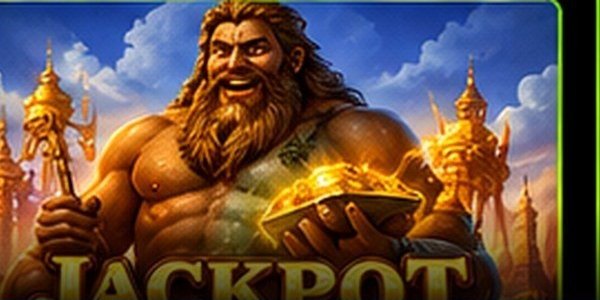 Giant pick bonus & progressive jackpot
Jackpot Giant
Playtech
 Treasure pick bonus & progressive jackpot
Beach Life
Playtech
 Witches' Brew Free Games & multiplier
Halloween Fortune
Playtech
 Fire Blaze respins & multiplier Free Games
Blue Wizard
Playtech
 Progressive-Wild Free Games
Panther Pays
Playtech
Operators often run more than one RTP version of the same game. Figures marked “Check in-game” have not been verified for this site yet — always confirm in the game's own info screen.