
Providers / Thunderkick

Thunderkick
A small Swedish studio with an unusually consistent house style and a preference for odd, characterful themes.
IN SHORT
Thunderkick is a slot studio known for distinctive art and clean feature design. Across the 10 titles covered here, standard return figures run 96.1%–97.6%, with volatility rated high, medium.
Return percentages are the studio's default configurations. Most large suppliers ship several reduced versions of the same game to operators, so always confirm the figure in the game's own information screen before playing.
- Games covered 10
- RTP range 96.1%–97.6%
- Known for Distinctive art and clean feature design
- Who Thunderkick are
- What a small studio changes
- Signature mechanics
- Esqueleto Explosivo: 17 paylines and dropping symbols
- The Beat the Beast series
- No feature buys, and why that matters
- RTP configurations
- Catalogue map
- Volatility profile
- Reading a Thunderkick info screen
- Where Thunderkick fits in a session
- Strengths and weaknesses
- Why a low ceiling can be better value
- Finding Thunderkick games in a lobby
- FAQ
Who Thunderkick are
Thunderkick is a small Swedish studio founded in 2012 and based in Stockholm. It is one of the last genuinely boutique developers with real distribution: a team measured in dozens rather than hundreds, a catalogue in the dozens of titles rather than the hundreds, and a release schedule that has never chased volume.
Its identity is built on a specific kind of restraint. Thunderkick games are usually 5x3 or small-grid layouts with one clear idea, a distinctive art style leaning toward the odd and hand-drawn, and mechanics you can understand in one round. There is no proprietary engine branding, no jackpot network, and no attempt to compete on maximum win figures.
The studio holds the supplier licences needed for the major regulated markets and its games are certified by independent test labs, so it appears in the same lobbies as suppliers a hundred times its size. That is a reasonable achievement for a studio of its scale, and it is also why you will find it filtered under providers at most licensed casinos accepting Australian players.
What a small studio changes
Studio size has practical consequences that are easy to overlook when you are browsing a lobby.
- Almost no filler. A studio releasing a handful of games a year cannot afford a throwaway release. The hit rate across Thunderkick's catalogue is high compared with the volume studios, where most titles are forgettable by design.
- Slower to follow trends. Thunderkick was late to cluster grids, late to big-multiplier feature rounds, and has largely skipped the ceiling arms race entirely. If you want the newest mechanic, this is not the shelf.
- Older games stay in lobbies. With a small catalogue, individual titles get long lives. Esqueleto Explosivo from 2014 and Fruit Warp from 2013 are still deployed a decade later.
- Less market-by-market variation. A smaller catalogue means fewer variants, so what you read about a Thunderkick game is more likely to match what appears in your lobby than with a supplier running dozens of configurations across hundreds of titles.
Signature mechanics
Dropping-symbol chains with escalating multipliers
Esqueleto Explosivo is the studio's landmark original. It uses 17 fixed paylines: winning symbols explode, replacements drop into the emptied positions and consecutive wins advance the Mucho Multiplier. Later sequels change the win system, which is why the original should not be described as a cluster-pay title.
Collect-and-upgrade free spins
Pink Elephants uses a collection mechanic where peanut symbols upgrade elephant symbol values during free spins, so the round improves as it progresses rather than being decided at the trigger. Midas Golden Touch works similarly with expanding golden symbols.
Symbol-count grids without paylines
Fruit Warp and Well of Wonders abandon traditional paylines. Their symbol-occurrence mechanics care about counts and feature states rather than a standard left-to-right line map. Both are useful examples of Thunderkick experimenting with alternative win evaluation years before those layouts became common.
Single-feature design
Most Thunderkick titles have exactly one bonus round. There is no pick screen, no second-tier buy, no jackpot ladder. That simplicity is the studio's defining trait and the main reason its games are easy to evaluate honestly: there is nowhere for complexity to hide the maths.
Esqueleto Explosivo: 17 paylines and dropping symbols
Because Esqueleto Explosivo is the game many players meet first, its original rules are worth stating precisely. Thunderkick publishes it at 96.0% RTP, Low volatility and 700x maximum exposure, using 17 paylines, Dropping Symbols, Mucho Multipliers and an Explosivo Wild.
A payline win removes the contributing symbols and replacements fall into the open positions. If another valid line win forms, the reaction continues and the multiplier can climb through the same purchased game round. Thunderkick's own game-information sheet lists no separate Bonus Game for the original.
That matters because Esqueleto Explosivo 2 and 3 use different win systems and add bonus mechanics. Reading sequel rules back into the original produces incorrect claims about clusters, Free Spins and maximum exposure. The correct comparison on this page is title by title, not franchise name by franchise name.
The Beat the Beast series
Beat the Beast is Thunderkick's one deliberate series, and it is unusual in structure. Each entry — Kraken's Lair, Cerberus Inferno, Mighty Sphinx, Griffin's Gold and others — uses the same 5x3 frame, the same stake structure and a similar free spins shape, with a different beast, wild behaviour and volatility tuning.
The design intent is a shared skeleton where the differences are legible: once you have played one, you can read the others quickly. Kraken's Lair, the entry we list, is the highest-variance of the early set with a ceiling in the low thousands.
It is also a useful demonstration of a general principle: a series built on one engine is honest about being one engine. Compare that with studios where a sequel silently doubles the volatility while keeping the same name and artwork.
No feature buys, and why that matters
Thunderkick has largely stayed out of feature-buy mechanics. Most of its catalogue has no purchase button at all.
That single absence changes the risk profile of a session more than any other design decision a studio makes. A feature buy converts a planned session into one decision that can consume it entirely, and it is the mechanic most closely associated with rapid, unplanned loss. A catalogue without buys forces the game to be played at the pace of the spin button.
The trade-off is that triggering a bonus takes as long as it takes. If you have grown used to buying rounds, a Thunderkick session will feel slow. That slowness is the point, and it is worth reframing as cheapness: the same budget buys considerably more playing time here.
RTP configurations
Thunderkick's published returns have historically sat in the 96 to 97% region, which is respectable, and several older titles are toward the upper end of that band. The studio supplies operators with configurations as everyone does, but with a smaller catalogue there is less variation to navigate.
Check the info screen anyway. A reduced build undercuts the main practical argument for playing a Thunderkick game, which is that it offers a fair return with a survivable distribution.
Catalogue map
| Title | Core mechanic | What to expect |
|---|---|---|
| Esqueleto Explosivo | 17 paylines, Dropping Symbols & Mucho Multiplier | Low volatility, 96.0% RTP, 700x max exposure |
| 1429 Uncharted Seas | 25 paylines, Expanding Wild & Free Spins | Low volatility, 98.6% RTP, 670x max exposure |
| Pink Elephants | Symbol upgrade collection in free spins | High variance; the round improves as it runs |
| Midas Golden Touch | Expanding golden symbols | High variance, binary-feeling bonus |
| Beat the Beast: Kraken's Lair | 9 paylines, Expanding Win & retriggerable Free Spins | Very high volatility, 96.12% RTP, 7,777x max exposure |
| Fruit Warp | Occurrence-style fruit counts & dynamic multiplier | Medium volatility, 97.0% RTP, 11,000x max exposure |
| Well of Wonders | Occurrence wins, respins, multipliers & Fairy | Low volatility, 96.1% RTP, 2,280x max exposure |
| Jaguar Temple, Flame Busters, Arcader | Fixed lines/ways with expanding, Fire and arcade modifiers | Low-to-high volatility; title-specific caps and features |
Volatility profile
Thunderkick's catalogue spans very different ceilings and volatility profiles. Older titles such as 1429 Uncharted Seas and Esqueleto Explosivo cap at hundreds of times stake, while Fruit Warp and newer/high-variance releases can reach several thousand or more. The useful comparison is therefore game-specific rather than assuming a single house style.
The house style also keeps more of the return in the base game than the bonus-dependent designs do. Esqueleto Explosivo and Fruit Warp both produce meaningful outcomes without needing a feature trigger, which is increasingly rare.
If you have been playing extreme-ceiling games and finding sessions end in minutes, this catalogue is the practical counterweight — not because it pays more overall, but because the distribution is shaped to give you play rather than tail outcomes.
Reading a Thunderkick info screen
- The return figure. Straightforward here, since most titles have a single mode and no buy tiers to compare.
- Multiplier progression. On dropping-symbol or cascade games, check when the multiplier increases, when it resets and whether a win is required for the higher value to matter.
- The total bet field. Thunderkick uses standard bet-level staking; confirm the total before your first spin as always.
- Autoplay loss limits. Available in regulated builds and worth setting, particularly on a catalogue where you are likely to play longer sessions.
Where Thunderkick fits in a session
The catalogue is useful for comparing how the same studio distributes return across very different maths models. Esqueleto Explosivo and 1429 Uncharted Seas are relatively low-volatility, while Kraken's Lair is Very High. Stake and loss limits should be chosen around the individual title rather than the provider name.
It is also a good place to play when you notice yourself chasing. There are no buy buttons, no jackpot deadlines, no tournament leaderboards and no gamble ladders — the game gives you far fewer levers to escalate with. That is a genuine harm-reduction property, even if the studio never marketed it that way.
What it will not do is deliver a life-changing result. The maths does not contain one. Going in expecting otherwise is the only real way to be disappointed by this catalogue.
Strengths and weaknesses
Strengths. Distinctive art direction; several genuinely unusual win systems; older titles remain available; and provider documentation publishes clear game-level details for much of the catalogue.
Weaknesses. Older and newer Thunderkick releases can differ sharply in RTP, volatility and maximum exposure, so broad provider-level generalisations are unreliable. Some legacy reviews also mix sequel mechanics into the original games, making live rule verification important.
FAQ
What is Thunderkick's best-known game?
Esqueleto Explosivo from 2014, with Pink Elephants close behind. Both remain widely available a decade after release.
Do Thunderkick games have bonus buys?
Mostly not. The catalogue has largely stayed out of feature-buy mechanics, which is one of its more meaningful practical differences from the studios it competes with.
Are the ceilings really that low?
Some early Thunderkick games do have modest caps, but the catalogue is not uniform. Fruit Warp reaches 11,000x and Kraken's Lair 7,777x, while Esqueleto Explosivo is 700x and 1429 Uncharted Seas 670x.
What is unusual about 1429 Uncharted Seas?
Thunderkick publishes 1429 Uncharted Seas at 98.6% RTP with Low volatility, 25 paylines, Expanding Wilds, Free Spins and 670x max exposure. It is not part of the Esqueleto family.
Is Thunderkick independent?
Yes. It remains a small Stockholm studio rather than part of one of the large groups that have absorbed most of its Swedish contemporaries.
Why a low ceiling can be better value
This deserves spelling out, because the industry's marketing points the other way and Thunderkick is the clearest case for the opposite argument.
Two games can both return 96% and feel completely different. The difference is how that return is distributed. A game with a 20,000x ceiling funds the tail by taking probability out of everything below it, which means most sessions end with nothing. A game with a 500x ceiling spreads the same return across many more outcomes, which means more of your spins produce something.
Put concretely: on a $100 budget at $0.50 a spin, both games cost you around $8 in expected loss over 200 spins. On the low-ceiling game you will likely see dozens of small wins, several decent ones, and finish somewhere near where you started. On the high-ceiling game the most likely single outcome is losing most of the budget without a feature, with a small chance of a result that dwarfs it.
Neither is better mathematically. But if what you want is two hours of entertainment for $8 rather than a lottery ticket, the low-ceiling game is straightforwardly the better instrument, and almost nobody markets it that way.
Finding Thunderkick games in a lobby
A small catalogue has one practical downside: these games sit low in lobby rankings, which are usually sorted by popularity or by commercial arrangement rather than by quality.
Use the provider filter rather than browsing the front page, and check both the studio's older titles and the Beat the Beast series, since lobbies often stock only two or three entries. If a specific title you have read about is not available at your operator, it is more likely a distribution gap than a market restriction — a small supplier simply is not carried everywhere.
Check the return figure and the multiplier ladder in the info screen, set an autoplay loss limit if you are using autoplay, and set a deposit limit first. This page is information, not a recommendation to play.
Thunderkick slots
 Dropping symbols, Mucho Multipliers & Explosivo Wild
Esqueleto Explosivo
Thunderkick
 Mystery Scatter, symbol transformation & retriggerable Free Spins
Pink Elephants
Thunderkick
 Multiplier Wilds & sticky-win Free Spins
Midas Golden Touch
Thunderkick
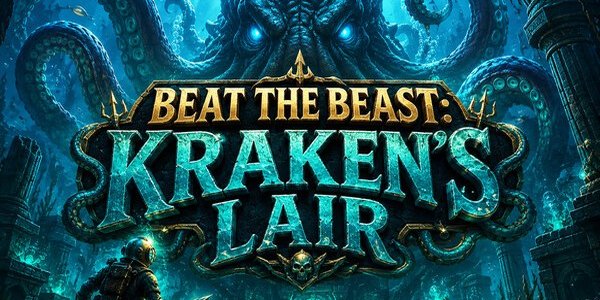 Expanding wins & retriggerable Free Spins
Beat the Beast: Kraken's Lair
Thunderkick
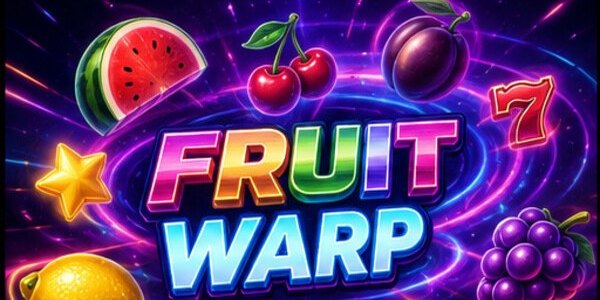 Occurrence-style fruit collection & dynamic multiplier
Fruit Warp
Thunderkick
 Occurrence wins, respins, multipliers & Fairy modifiers
Well of Wonders
Thunderkick
 Expanding symbols & Expanding-Wild Free Spins
Jaguar Temple
Thunderkick
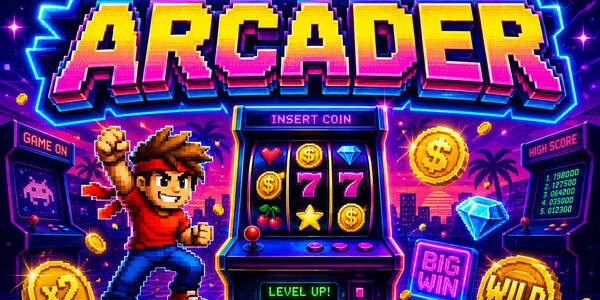 Arcade-style Expander/Mystery features & Free Spins
Arcader
Thunderkick
 Fire symbols, Fire Drill & escalating Free Spins
Flame Busters
Thunderkick
 Expanding ship Wilds & up to 50 Free Spins
1429 Uncharted Seas
Thunderkick
Operators often run more than one RTP version of the same game. Figures marked “Check in-game” have not been verified for this site yet — always confirm in the game's own info screen.