Providers / Games Global / Thunderstruck Wild Lightning
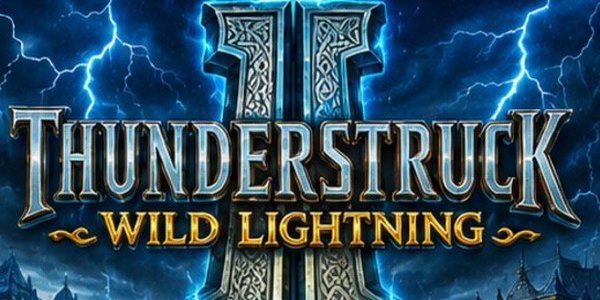
Thunderstruck Wild Lightning
Thunderstruck Wild Lightning is a slot from Games Global, a studio known for progressive jackpots and legacy feature slots. Check the stats below, then confirm them in the game's own info screen before you play for real money.
Game facts
Provider: Games Global
RTP: 96.1%
Volatility: High
Maximum win: Check in-game
Main feature: Hold and win
Play responsibly
Operators can run different RTP versions of the same game, so the figure shown in your casino lobby may not match the one above. Always open the in-game info screen and confirm it yourself.
Set a deposit limit before you start and treat any win as a bonus, not an income.
- Provider
- Games Global
- Default RTP
- 96.1%
- Volatility
- High
- Maximum win
- See in-game info screen
- Core mechanic
- Hold and win
- What Thunderstruck Wild Lightning is
- The Thunderstruck family, compared
- A 5x4 grid and what changes
- Expanding wilds and hold-and-win
- Why hold-and-win games feel different
- 96.10% — the weakest of the three
- Why we don't publish a max win
- The published numbers
- High volatility versus the original's medium
- Stake sizing in practice
- Which Thunderstruck should you play?
- Common misconceptions
- Who this suits
- Reading the info screen
- Where this fits in a session
- Twenty years of one series
- FAQ
What Thunderstruck Wild Lightning is
Thunderstruck Wild Lightning is the modern entry in the Games Global Norse series, following the 2004 original and the 2010 Thunderstruck II. It runs on a 5x4 grid with a return of 96.10% and high volatility.
The structure is a departure. Where Thunderstruck II built its reputation on four progressively unlocking bonus tiers and Rolling Reels, this game uses expanding wilds and a hold-and-win mechanic — the modern collect-and-respin format.
The Thunderstruck family, compared
| Title | Released | Return | Volatility | Structure |
|---|---|---|---|---|
| Thunderstruck | 2004 | 96.10% | Medium | Simple 9-line classic |
| Thunderstruck II | 2010 | 96.65% | Medium | 243 ways, four unlocking tiers, Rolling Reels |
| Wild Lightning | Modern | 96.10% | High | 5x4, expanding wilds, hold-and-win |
Twenty years of releases and the middle entry is still the best on return. Wild Lightning matches the 2004 original's percentage while being considerably more volatile — you are getting a harsher distribution at the same price.
A 5x4 grid and what changes
Five reels of four rows gives twenty positions against the 5x3 fifteen of its predecessors. More positions means more room for expanding wilds and more space for collect symbols to land, which is what the hold-and-win format needs.
It also changes the feel. A four-row grid reads as busier, and combined with a high volatility rating that produces a game that looks more active than its payout frequency justifies. Visual activity is not return — a point worth holding onto here specifically.
Expanding wilds and hold-and-win
Expanding wilds fill their reel and substitute across the grid, with multipliers reported in the feature rounds. This is the Thunderstruck series' recurring wild treatment, updated.
Hold-and-win is the modern collect format: special symbols land and lock in place, awarding respins. Each new symbol resets the respin counter, and the round ends when respins run out or the grid fills. Values attached to the locked symbols are paid at the end.
Exact respin counts, symbol values and any jackpot tiers vary between builds, so read the rules pages in your version rather than relying on a review — including this one — for specifics.
Why hold-and-win games feel different
Worth explaining because it is now one of the most common formats in slots and it works on players in a specific way.
In a normal bonus, you watch spins resolve. In hold-and-win, you watch a grid fill up, with each new symbol visibly extending the round and adding to a running total. The board shows accumulated progress at all times.
A grid that is two-thirds full with one respin remaining creates a powerful sense of being close to something. Structurally you are not — each respin is independent and the round ends when it ends. The format is engineered to make the near-miss legible, which is exactly what makes it compelling and exactly why it warrants a firm limit.
None of that makes the maths unfair. It means the emotional shape of the round is designed rather than incidental, and knowing that helps.
96.10% — the weakest of the three
At 96.10% the house edge is 3.90%, against 3.35% on Thunderstruck II. That is roughly $6 more per $1,000 staked, on a game that is also harsher in distribution.
And as across this platform, operator-configurable builds mean the figure may be lower still at your casino. Published RTP indexes for Games Global titles show ranges reaching well below the headline numbers on many games.
Check the Help or Info section. On a title that starts below its own predecessor, a reduced build has very little to recommend it.
Why we don't publish a max win
Our stat panel shows "check in-game" for the maximum win.
We could not source a ceiling attributable confidently to this specific title. The Thunderstruck name covers several releases and hold-and-win games often carry jackpot tiers whose values differ by build — both of which make cross-attribution likely.
Read the figure in your build's paytable, and check specifically whether any jackpot tiers are present, since those change what the maximum means.
The published numbers
| Statistic | Figure |
|---|---|
| Return | 96.10% (configurable builds circulate) |
| Maximum win | Not reliably attributable — read your paytable |
| Volatility | High |
| Grid | 5x4 |
| Mechanics | Expanding wilds, hold-and-win respins |
High volatility versus the original's medium
The step up in volatility is the series' biggest change and it is worth being clear about what you lose.
Thunderstruck II's medium rating is why it works as a long-session game: a bankroll lasts, the balance moves in trackable steps, and the progressive unlocks give a reason to continue. Wild Lightning replaces that with a harsher distribution at a lower return — a shorter session for the same money, with more of the value locked in the hold-and-win rounds.
For a player who wants the modern format, that is a fair trade. For a player who liked Thunderstruck II because of how it played, it is not the same game wearing new clothes.
Stake sizing in practice
- Budget 250 to 300 spins — higher volatility than the earlier entries demands more cushion.
- Check the active return before your first spin.
- In hold-and-win rounds, remember each respin is independent. A nearly full grid is not close to anything.
- Read whether jackpot tiers exist in your build and what qualifies for them.
- Set a time limit; the collect format is unusually easy to keep playing.
Which Thunderstruck should you play?
Thunderstruck II if you want the best return in the series, medium volatility and a bonus structure that rewards long sessions. On value it is not close.
Wild Lightning if you specifically want the hold-and-win format and modern presentation, and accept paying about $6 more per $1,000 staked for it.
The 2004 original only for nostalgia — same return as Wild Lightning with a fraction of the content.
Common misconceptions
The first is that the newest entry must be the best. In this series the 2010 game returns most.
The second is that a nearly-full hold-and-win grid means you are close. Each respin is independent; the visible progress is presentation, not probability.
The third is that a busier 5x4 grid means more frequent wins. More positions with a high volatility rating and a lower return means the opposite of what the screen suggests.
Who this suits
This suits a player who enjoys hold-and-win collect rounds and wants them with a Norse theme and modern presentation. The format has genuine appeal and this is a competent execution of it.
It suits poorly anyone choosing on numbers within the series, and anyone who found Thunderstruck II's steady medium-volatility sessions the reason to play it.
FAQ
What is the RTP?
96.10%, the weakest of the three Thunderstruck games we cover. Configurable builds circulate — check the Help or Info section.
What is the maximum win?
Not reliably attributable to this specific title. Read your build's paytable, and check whether jackpot tiers are present.
How does hold-and-win work?
Special symbols lock in place and award respins, with each new symbol resetting the counter. The round ends when respins run out or the grid fills.
Is it better than Thunderstruck II?
Not on the numbers — 96.10% against 96.65%, and high volatility against medium. Its advantage is the modern format.
Does a nearly full grid improve my odds?
No. Each respin is independent and the visible progress does not change the probability of the next symbol landing.
Reading the info screen
- The active return figure — 96.10% is the headline and configurable builds circulate.
- Whether jackpot tiers are present in the hold-and-win round, and what qualifies for them. If a jackpot exists, part of your stake funds it and the ordinary-play return is lower than the headline.
- The respin rules — how many respins each new symbol awards and whether the counter resets fully.
- The maximum win in your build, which we do not publish.
- The total bet field across the 5x4 grid.
The jackpot question is the one to prioritise. Hold-and-win games frequently carry jackpot tiers, and as covered on our Mega Moolah page, a jackpot contribution can move a game's effective return substantially below its advertised figure.
Where this fits in a session
This is the game to choose if the hold-and-win format is what you enjoy. The collect-and-lock round is genuinely engaging and the Norse presentation is well handled.
Budget 250 to 300 spins and set a time limit, because the format's visible progress makes it unusually easy to keep going. Check whether jackpot tiers are present in your build before you start, since that changes the effective return.
If you came here because you liked Thunderstruck II, be clear that this is not a continuation of that game's design — different structure, higher volatility, lower return. The 2010 title is still in most lobbies and still the better bet.
Twenty years of one series, in one table
The Thunderstruck line is a useful case study because it spans the whole modern history of slot design under one brand.
| Era | Title | Return | Volatility | What the design prioritised |
|---|---|---|---|---|
| 2004 | Thunderstruck | 96.10% | Medium | Simplicity — nine lines, one feature |
| 2010 | Thunderstruck II | 96.65% | Medium | Depth and replay value via progressive unlocks |
| Modern | Wild Lightning | 96.10% | High | Session drama via collect-and-lock rounds |
The 2010 entry is the outlier in the best way: the highest return of the three, achieved in an era when studios competed on player value rather than on ceiling size. The modern entry returns what a 2004 game did while asking you to accept considerably more variance.
That is not a criticism of the design — hold-and-win is popular because it is genuinely engaging. It is a reminder that "newer" and "better value" have not moved together in this industry for well over a decade.
Check the active return and the maximum win in your own build, remember that hold-and-win respins are independent regardless of how full the grid looks, and set both a loss limit and a time limit. This page is information, not a recommendation to play.
Other Games Global slots
 Progressive jackpot
Mega Moolah
Games Global
 Chamber of Spins
Immortal Romance
Games Global
 Great Hall of Spins
Thunderstruck II
Games Global
 Multiplier wilds
Break da Bank Again
Games Global