Providers / Hacksaw Gaming / Dork Unit
Dork Unit
Dork Unit is a slot from Hacksaw Gaming, a studio known for bonus-buy slots and instant-win scratchies. Check the stats below, then confirm them in the game's own info screen before you play for real money.
Game facts
Provider: Hacksaw Gaming
RTP: 96.24%
Volatility: Medium-high
Maximum win: 10,000x
Main feature: Multiplier symbols
Play responsibly
Operators can run different RTP versions of the same game, so the figure shown in your casino lobby may not match the one above. Always open the in-game info screen and confirm it yourself.
Set a deposit limit before you start and treat any win as a bonus, not an income.
- Provider
- Hacksaw Gaming
- Default RTP
- 96.24%
- Volatility
- Medium-high
- Maximum win
- 10,000x
- Core mechanic
- Multiplier symbols
- What Dork Unit is
- A 5x4 grid with 16 paylines
- The paytable problem, stated plainly
- Gift Boxes and the multiplier wilds
- Dork Spins and Gift Bonanza
- Volatility: the studio and the reviewers disagree
- The published numbers
- Pace, and budgeting in spins
- Multiple RTP builds and the demo trap
- Stake sizing in practice
- Where this fits in a session
- Common misconceptions
- Who this suits
- How to read a paytable before you play
- The 16-payline question
- A note on the max stake
- FAQ
What Dork Unit is
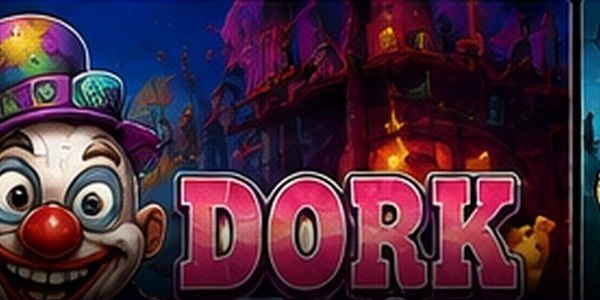
Dork Unit is Hacksaw Gaming's bright cartoon slot starring three characters — Tiny Timmy, Hefty Hector and Long Lenny — and it is a deliberate break from the studio's usual dark output.
Default return is 96.24% (some sources list 96.28%), the maximum win is 10,000x your stake, and the grid is 5x4 with 16 paylines. Maximum stake is reported at $20, which caps the theoretical top payout around $200,000.
A 5x4 grid with 16 paylines
Twenty positions and 16 fixed paylines — a modest count by modern standards, where 243 or 1,024 ways is more typical. Wins form left to right along those lines.
A low payline count is not a disadvantage in itself; the paytable is calibrated to it. But it does shape the game in a specific way described below, and it is the reason this title plays differently from its stablemates despite a similar return.
The paytable problem, stated plainly
This is the most useful thing on the page and most reviews skip it.
Dork Unit's regular symbols are ten in total: the card ranks A, K, Q, J and 10, plus a fruit set of cherries, lemon, carrot, apple and strawberry. Five matching high-pay symbols award roughly 4x to 10x your bet.
Four to ten times stake for a five-of-a-kind on the best regular symbols is low. There are no high-value character symbols in the regular paytable to lift it. Combined with only 16 paylines, the base game's own payouts are thin by design.
Because the regular paytable tops out around 10x, essentially all of Dork Unit's value sits in the Gift Box wild multipliers and the two bonus features. That is worth knowing before you play: ordinary winning spins here will feel underwhelming, and that is not bad luck — it is where the maths has been placed.
Gift Boxes and the multiplier wilds
Gift Boxes act as wild multipliers in both the base game and the bonus, and they can trigger instant prizes reported at up to 200x.
Their defining property is that they stack. Multiple Gift Boxes triggering together is what produces the game's large results, and reviewers consistently describe the good outcomes as coming from cascading multiplier wilds rather than from symbol combinations.
Check your build's rules for whether stacked multipliers add or multiply — Hacksaw handles this differently across titles, and on a game where the wilds are doing all the work it is the single most consequential rule in the paytable.
Dork Spins and Gift Bonanza
- Dork Spins — the three characters act as expanding wilds with multipliers. The round where the theme and the maths line up.
- Gift Bonanza — built around the Gift Box mechanic, concentrating the multiplier wilds into a single round.
Both are reachable by triggering naturally or by buying where jurisdiction permits. As with the rest of Hacksaw's catalogue, the two rounds have different shapes — read both descriptions before choosing.
Volatility: the studio and the reviewers disagree
Hacksaw rates this game's volatility around medium. Several reviewers describe it as high. Both positions appear in print from credible sources.
The explanation is probably the paytable structure above. Statistically, frequent small hits across 16 paylines might well produce a medium rating in the studio's model. Experientially, a game whose regular symbols top out at 10x and whose real value sits in stacked wild multipliers feels high-variance, because the ordinary wins do not move your balance.
Our stat panel carries medium-high as the honest middle. What matters more than the label: expect a lot of small wins that go nowhere, punctuated by rare Gift Box sequences that do the work.
The published numbers
| Statistic | Figure |
|---|---|
| Default return | 96.24% (some sources 96.28%) |
| Maximum win | 10,000x |
| Grid | 5x4, 16 paylines |
| Five-of-a-kind on high symbols | ~4x to 10x bet |
| Gift Box instant prizes | Up to 200x |
| Maximum stake | ~$20 |
Pace, and budgeting in spins
Hacksaw builds fast — roughly a second per spin, close to double an older title's rate. At $0.50 a spin and 96.24%, 800 spins an hour costs around $15.00 in expectation and 1,500 spins around $28.20.
On a game where most winning spins return less than the stake, the pace is particularly easy to lose track of — nothing on screen marks the passage of a hundred spins. Count them, and set the session in spins rather than minutes.
Multiple RTP builds and the demo trap
96.24% is Hacksaw's default and multiple configurations exist. Demo mode does not reliably show your casino's active build. Read the real-money game information panel for the return, the stake limits and the buy prices that apply where you are playing.
Stake sizing in practice
- Budget 250 to 300 spins and count them.
- Expect the base game to feel flat. That is the design, not a dry spell.
- If you buy, know which of the two rounds you are purchasing.
- The $20 stake cap is lower than most Hacksaw titles, which limits exposure — a sensible constraint rather than a limitation.
- Take a large Gift Box result off the table; stacked multiplier sequences do not repeat soon.
Where this fits in a session
Dork Unit is a game to play for its personality. The presentation is genuinely funny, the characters are well drawn, and it is the lightest thing in a catalogue otherwise full of crypts, prisons and horror.
On numbers it is mid-table: 96.24% is below Stormforged's 96.41% and Wanted Dead or a Wild's 96.38%, and the 10,000x ceiling is standard for the studio. Budget 250 to 300 spins and treat it as entertainment spend rather than the value pick.
Common misconceptions
The first is that a bright cartoon theme means a gentle game. The regular paytable tops out around 10x and the value sits in rare multiplier sequences.
The second is expecting the character symbols to pay big. They act as expanding wilds in Dork Spins rather than as high-value regular symbols.
The third is trusting a single volatility rating. The studio says medium, reviewers say high, and the honest answer is that it plays harsher than its rating because of how the paytable is weighted.
Who this suits
This suits a player who wants Hacksaw's mechanics without the grim themes, likes multiplier-wild games, and has a bankroll for a few hundred spins. The $20 stake cap makes it harder to lose control quickly than most of the catalogue.
It suits less well anyone who wants a base game that pays. If flat ordinary spins frustrate you, Stormforged — where Treasure Chests reach 2,500x in the base game — is a better fit at a better return.
FAQ
What is Dork Unit's RTP?
96.24% as the default, though some sources list 96.28%. Confirm the active figure in the real-money game information panel.
Why do ordinary wins pay so little?
Five matching high symbols award roughly 4x to 10x bet, and there are no high-value character symbols in the regular paytable. The value is concentrated in the Gift Box multiplier wilds.
What are the two bonus features?
Dork Spins, where the three characters act as expanding wilds with multipliers, and Gift Bonanza, built around the Gift Box mechanic.
Is it medium or high volatility?
Hacksaw rates it around medium; several reviewers call it high. It plays harsher than a medium rating suggests because the ordinary wins are so small.
What is the maximum win?
10,000x your stake, reached through stacked Gift Box multipliers rather than symbol combinations.
How to read a paytable before you play
Dork Unit is a good teaching example, because its paytable tells you exactly how the game will feel and almost nobody looks.
Two numbers do the work. First, what five-of-a-kind pays on the best regular symbol — here, roughly 4x to 10x your bet. Second, what the wilds and features can reach — here, 200x instant prizes and stacking multipliers toward a 10,000x ceiling.
When the first number is small and the second is large, you are looking at a game where ordinary spins will not move your balance and the entire experience depends on rare feature sequences. That is knowable in thirty seconds, before staking anything.
Compare the top regular-symbol payout against the ceiling on any slot. A game paying 40x for five premiums against a 5,000x cap is delivering meaningful value through ordinary combinations. A game paying 8x against a 10,000x cap is not — everything sits in the features. Neither is better, but they are completely different sessions, and the paytable tells you which you are about to have.
The 16-payline question
Sixteen paylines is low for a modern release and players notice. Worth explaining what it does and does not mean.
It does not disadvantage you in return terms — the paytable is calibrated to the line count, and the game's 96.24% is delivered across those sixteen lines rather than despite them. A 1,024-way game at the same percentage returns the same amount.
What it changes is texture. Fewer lines means fewer registered wins per spin and larger individual payouts when they land, relative to a high-ways game at the same return. Combined with the low regular-symbol payouts described above, that produces a base game where a lot of spins simply do nothing.
If you have come from a 243-way or 1,024-way game and this feels sparse, that is why — and it is worth adjusting your expectations rather than reading it as a cold streak.
A note on the max stake
Dork Unit caps at around $20 per spin, which is lower than most of Hacksaw's catalogue and considerably lower than the $100 ceiling on games like Cursed Crypt.
That cap is worth noticing as a feature rather than a limitation. On a game where the value sits in rare multiplier sequences, a high stake does not improve your chance of reaching one — it only increases what each unproductive spin costs. A $20 ceiling puts a hard limit on how fast a session can go wrong.
It also means the 10,000x maximum translates to about $200,000 at top stake rather than the seven-figure numbers some games advertise. The ceiling is the same multiple either way; the cash figure is smaller because the exposure is smaller.
Check the active return in the real-money game panel, read the paytable so the small regular payouts are not a surprise, budget in spins rather than minutes, and set a deposit limit first. This page is information, not a recommendation to play.
Other Hacksaw Gaming slots
 Duel free spins
Wanted Dead or a Wild
Hacksaw Gaming
 Coin collect
Le Bandit
Hacksaw Gaming
 Multiplier wilds
Chaos Crew
Hacksaw Gaming
 Sticky respins
Hand of Anubis
Hacksaw Gaming