Providers / Hacksaw Gaming / RIP City
RIP City
RIP City is a slot from Hacksaw Gaming, a studio known for bonus-buy slots and instant-win scratchies. Check the stats below, then confirm them in the game's own info screen before you play for real money.
Game facts
Provider: Hacksaw Gaming
RTP: 96.22%
Volatility: Medium-high
Maximum win: 12,500x
Main feature: Multiplier wilds
Play responsibly
Operators can run different RTP versions of the same game, so the figure shown in your casino lobby may not match the one above. Always open the in-game info screen and confirm it yourself.
Set a deposit limit before you start and treat any win as a bonus, not an income.
- Provider
- Hacksaw Gaming
- Default RTP
- 96.22%
- Volatility
- Medium-high
- Maximum win
- 12,500x
- Core mechanic
- Multiplier wilds
- What RIP City is
- The Wild Cat symbol
- Five bonus feature options
- How to approach the choice
- The published numbers
- Why we don't publish a max win
- 96.22% — the lowest of the five
- Among the studio's harshest
- Feature buys
- Stake sizing in practice
- Where it sits in the catalogue
- Common misconceptions
- Who this suits
- Pace, and budgeting in spins
- Multiple RTP builds and the demo trap
- Where this fits in a session
- FAQ
What RIP City is
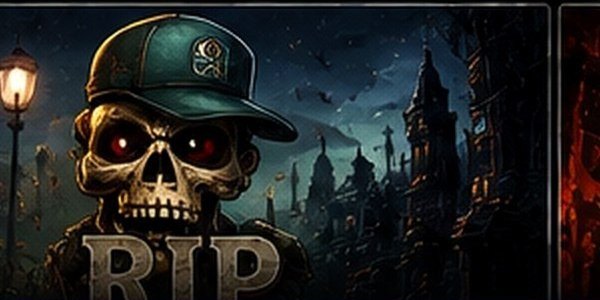
RIP City is Hacksaw Gaming's cartoon-retro release, built around locked cats and a set of five bonus feature options — the widest choice of any game on this site. Default return is 96.22%, and it is routinely listed among the studio's most volatile titles alongside Chaos Crew 2 and Wanted Dead or a Wild.
The presentation is immersive and deliberately loud — audio and visuals doing as much work as the maths, which is the studio's signature. Underneath it is one of the harsher distributions in this catalogue.
The Wild Cat symbol
The game's identity is the Wild Cat: a symbol that can turn into an expanding wild with a multiplier attached, expanding vertically with stacking multipliers.
Note the direction. On Wanted Dead or a Wild, the DuelReels mechanic converts entire reels horizontally. Here the cats expand vertically and their multipliers stack — so multiple cats in play compound rather than each acting alone.
The studio's design rule holds again: wilds in Hacksaw games rarely function as plain substitutes. They convert, expand, stack or collect.
The game's identity in the studio's own catalogue is its locked cats — wilds that hold position rather than landing and vanishing. That means value accumulates within a round, and the earlier a cat locks, the more spins its multiplier applies across.
Five bonus feature options
Five separate bonus options is more than any other game we cover — Wanted Dead or a Wild offers three, Hand of Anubis two.
The consistent pattern across Hacksaw's multi-option games, and across every studio doing this, is that the options are not equivalent: cheaper or more accessible rounds pay more reliably with a lower top end, and one premium option carries the game's ceiling.
Exact spin counts, trigger conditions and multiplier behaviour for each of the five vary between builds and regional versions, so read the rules pages in your version rather than relying on any review — including this page — for the specifics.
How to approach the choice
- Read all five before you play, not on the selection screen. Five options is genuinely a lot to weigh in the moment after a long wait.
- Match the option to your remaining budget. If this is the session's last bonus, take the one that pays most reliably rather than the one with the biggest ceiling.
- If buying, know which option the tier purchases. The cheap tiers cannot reach the top figure.
- Expect them to be balanced in return terms. Studios do not hand out expected value for choosing correctly — you are picking a shape, not a better deal.
The published numbers
| Statistic | Figure | What it means in a session |
|---|---|---|
| Default return | 96.22% | ~$38 expected cost per $1,000 staked |
| Volatility | High — among the studio's harshest | Long dead stretches are normal |
| Bonus options | Five | Not equivalent; only one carries the ceiling |
| Maximum win | Not reliably published | Read your build's paytable |
Why we don't publish a max win
Our stat panel shows "check in-game" for the maximum win, and that is deliberate.
Hacksaw publishes ceilings clearly for most of its catalogue — 12,500x for Wanted Dead or a Wild, 10,000x for Chaos Crew and Hand of Anubis — but the figure for RIP City did not come back consistently across the sources we checked, and this is a studio that ships multiple builds of the same title. Publishing a number we cannot stand behind would be worse than publishing none.
The paytable in your build carries the figure that applies to you. What can be said with confidence: stacking multipliers on vertically expanding wilds, across five bonus options, produces a long tail — expect a ceiling in the thousands rather than the hundreds.
96.22% — the lowest of the five
Among the Hacksaw titles we have covered, this is the weakest published return:
| Title | Return | House edge | Cost per $1,000 staked |
|---|---|---|---|
| Wanted Dead or a Wild | 96.38% | 3.62% | ~$36 |
| Le Bandit | 96.34% | 3.66% | ~$37 |
| Chaos Crew | 96.30% | 3.70% | ~$37 |
| Hand of Anubis | 96.29% | 3.71% | ~$37 |
| RIP City | 96.22% | 3.78% | ~$38 |
The spread across the studio is narrow — about $2 per $1,000 staked between best and worst — so this is not a large penalty. But it is the lowest of the group, and combined with being one of the harshest distributions it means RIP City asks more and prices slightly worse than its stablemates. Its case is the mechanic and the presentation, not the numbers.
As across this catalogue: multiple builds exist and the demo does not reveal which one your casino runs. Only the real-money info panel confirms it.
Among the studio's harshest
RIP City is named consistently alongside Chaos Crew 2, Hounds of Hell, 2 Wild 2 Die and Wanted Dead or a Wild as the studio's most volatile output — games built around risk rather than a calm grind.
What that means practically: expect brutal dead stretches, failed bonuses, and sessions where the balance disappears without producing anything memorable. That is the honest description of this end of the catalogue, and the same clips culture that sells these games never shows it.
The five bonus options make the failures feel worse, incidentally — a choice you made and then watched fail reads differently from a bonus that simply happened. Worth knowing about yourself before you play a game that asks you to choose.
Feature buys
Buys are offered where permitted, priced per bonus option, each with its own published return figure. Read the one matching your purchase.
Convert prices to cash before tapping and know which of the five options you are buying. Feature purchases are prohibited under UK rules and restricted in several other regulated markets — where they are blocked, all five options must be triggered naturally.
Stake sizing in practice
- Budget in spins, not minutes. Hacksaw games resolve in about a second; an hour here costs roughly what two hours cost on a conventional slot at the same stake.
- Budget for at least 300 spins given this sits at the harsh end of the catalogue.
- Read all five bonus options before your first spin so the choice screen is a decision rather than a guess.
- Count any buy at its full spin equivalent.
- Set a deposit limit before you start, and a spin count you will actually stop at.
Where it sits in the catalogue
RIP City is the harshest and lowest-returning of the five Hacksaw games we have covered so far, with the most complex bonus structure. That combination suits a specific player and nobody else.
If you want the studio's identity at a gentler setting, Le Bandit is medium-high volatility at 96.34%. If you want the best return with genuine range, Wanted Dead or a Wild is 96.38% with three rounds and a documented 12,500x ceiling.
Common misconceptions
The first is that five bonus options means five chances. It means one choice among five shapes, and four of them cannot reach the top figure.
The second is that the cartoon presentation signals a gentle game. RIP City is named among the studio's most volatile titles.
The third is trusting a max win figure from a review site for this title. The figure is not consistently published and the studio ships multiple builds — read your paytable.
Who this suits
This suits an experienced player who wants maximum structural variety from one game and enjoys the locked-cat mechanic, with a bankroll sized for a harsh distribution. The five options genuinely do give it more range than anything else in the catalogue.
It suits nobody on a small budget, and it is a poor first Hacksaw game — the choice complexity and the volatility both reward knowing the studio already. Start with Le Bandit or Chaos Crew.
FAQ
What is the Wild Cat symbol?
A symbol that can become an expanding wild with a multiplier, expanding vertically with multipliers that stack when several are in play.
How many bonus features are there?
Five options — the widest choice of any game we cover. They are not equivalent; only one realistically carries the ceiling.
What is the maximum win?
We do not publish one, because the figure was not consistent across sources and Hacksaw ships multiple builds. Read your build's paytable.
Is 96.22% low?
It is the lowest of the Hacksaw titles we cover, though the spread across the studio is narrow — about $2 per $1,000 staked between their best and worst.
Is it a good first Hacksaw game?
No. It is among their harshest and has the most complex bonus choice. Le Bandit at medium-high volatility is the better starting point.
Pace, and budgeting in spins
RIP City runs at Hacksaw's standard speed — roughly a second per spin, close to double the pace of an older NetEnt or Play'n GO title. That does not change the maths; it changes how much of it you are exposed to per hour.
| Pace | Spins per hour | Turnover at $0.50 | Expected cost at 96.22% |
|---|---|---|---|
| Older-style slot | ~800 | $400 | ~$15.10 |
| Hacksaw pace | ~1,500 | $750 | ~$28.35 |
Set the session in spins, not minutes. On this game specifically — the lowest return of the five Hacksaw titles we cover — the difference compounds fastest.
Multiple RTP builds and the demo trap
The 96.22% figure is Hacksaw's default and the studio supplies operators with more than one configuration. Since this is already the weakest return of the five, a reduced build here would be a poor bet indeed.
Demo mode does not reliably show the build your casino runs. Use the free version to learn how the Wild Cat expansion and the five bonus options work, then read the real-money game information panel to confirm the active return, the stake limits and the feature rules where you are actually playing.
Where this fits in a session
RIP City's case is the Wild Cat mechanic and the five bonus options, not its numbers. At 96.22% it is the weakest return of the five Hacksaw games we cover, and the gap to Wanted Dead or a Wild at 96.38% is real money across a fast game's turnover.
If the cartoon presentation and the multiplier collection are what you want, budget 250 to 300 spins and enjoy it as entertainment spend. If you are picking on value, Wanted Dead or a Wild or Le Bandit at 96.34% are better-priced ways to play the same studio.
Multipliers reaching 200x are the highest in this batch, which is the genuine draw — just note that a bigger multiplier ceiling on a lower return means the money is shifted further into rare outcomes.
Read all five bonus options and the return figure in the real-money info panel, find the maximum win in your build since we do not publish one, budget in spins rather than minutes, and set a deposit limit first. This page is information, not a recommendation to play.
Other Hacksaw Gaming slots
 Duel free spins
Wanted Dead or a Wild
Hacksaw Gaming
 Coin collect
Le Bandit
Hacksaw Gaming
 Multiplier wilds
Chaos Crew
Hacksaw Gaming
 Sticky respins
Hand of Anubis
Hacksaw Gaming