
Providers / Quickspin / Crystal Prince
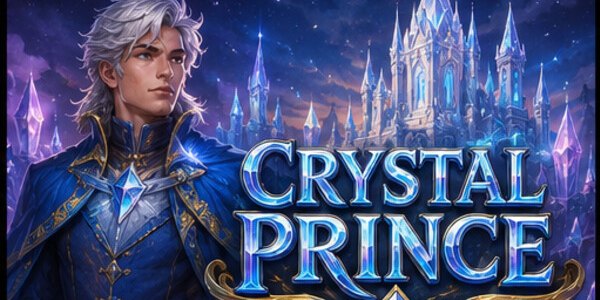
Crystal Prince
Crystal Prince is a slot from Quickspin, a studio known for story-driven bonus rounds. Check the stats below, then confirm them in the game's own info screen before you play for real money.
Game facts
Provider: Quickspin
RTP: Check in-game
Volatility: High
Maximum win: Check in-game
Main feature: Cluster
Play responsibly
Operators can run different RTP versions of the same game, so the figure shown in your casino lobby may not match the one above. Always open the in-game info screen and confirm it yourself.
Set a deposit limit before you start and treat any win as a bonus, not an income.
- Provider
- Quickspin
- Default RTP
- See in-game info screen
- Volatility
- High
- Maximum win
- See in-game info screen
- Core mechanic
- Cluster
- What Crystal Prince is
- Cluster pays explained
- Clusters versus paylines versus ways
- Cascades and the counting problem
- Charge meters and what they signal
- What is and isn't verified
- Judging the figure you find
- The Quickspin cluster family
- Stake sizing in practice
- Where this fits in a session
- Common misconceptions
- Who this suits
- Why cluster size matters disproportionately
- Reading the game panel
- Cluster games compared
- Where this fits in a session
- FAQ
What Crystal Prince is
Crystal Prince is a Quickspin fairy-tale slot built on cluster pays with cascading wins, rated high volatility.
It belongs to a group of Quickspin cluster titles that also includes Golden Glyph, Ghost Glyph and Azticons Chaos Clusters — a format the studio has returned to repeatedly.
Cluster pays explained
There are no paylines. Wins form when enough matching symbols connect adjacently on the grid — horizontally and vertically, not diagonally — and the winning group is removed, with new symbols cascading in to fill the gaps.
Minimum cluster sizes vary by game, typically five or more connected symbols. Larger clusters pay disproportionately more, which is where the format's bigger outcomes come from.
The practical difference from a payline game: position within the grid does not matter, only adjacency and count. There is no leftmost-reel requirement and no near-miss in the payline sense — a symbol either connects to a group or it does not.
Clusters versus paylines versus ways
| Structure | How wins form | What a "near miss" looks like |
|---|---|---|
| Cluster pays | Adjacent matching symbols, 5+ | A group one symbol short of qualifying |
| Paylines | Symbols on defined lines, left to right | Four on a line with the fifth missing |
| Ways to win | Matching symbols on consecutive reels | A reel missing the symbol |
| Scatter pays | Count anywhere on the grid, 8+ | Seven of a symbol needing eight |
None of these improves your return — each is calibrated in its own paytable. What they change is how a session reads, and cluster pays is the hardest of the four to judge at a glance, because a busy grid can look productive while paying almost nothing.
Cascades and the counting problem
Every cluster game cascades, and that creates a specific budgeting hazard worth naming.
One button press can produce five or six resolutions, each with its own win, animation and sound. Twenty minutes of play might be eighty presses or two hundred, and nothing on screen distinguishes them.
Your budget is denominated in spins, and a cascading game makes spins hard to count. The fix is mechanical: set the autoplay counter to the number of spins your budget covers and let it stop. That converts an intention into an enforced limit, which is the entire point of setting one.
Charge meters and what they signal
Quickspin's cluster games typically layer a charge or collection meter over the cascade mechanic — symbols removed by winning clusters fill a meter, and filling it awards wilds, multipliers or a bonus.
The question worth asking of any such meter, and it determines everything: does it persist between spins, or reset?
| Game | Meter behaviour |
|---|---|
| Wild Swarm | Persists across spins |
| Immortal Romance | Persists across the session |
| Honey Rush | Resets every spin |
| Fire in the Hole xBomb | Resets every spin |
A resetting meter means spin 300 is identical to spin 1 and a long session builds nothing. A persistent one means the session genuinely progresses. Read the panel — and either way, remember meter progress has no cash value if you stop, and the house edge is unchanged at every level.
What is and isn't verified
| Figure | Status |
|---|---|
| Studio | Quickspin — confirmed, listed in the official portfolio |
| Structure | Cluster pays with cascades |
| Volatility | High |
| Return to player | Not verified — read the game panel |
| Maximum win | Not verified — read the game panel |
We could not source return or ceiling figures for this title to the standard applied elsewhere on the site. Publishing a plausible guess would read as verified and stop you making the check that actually protects you.
Judging the figure you find
Quickspin's verified returns across the titles we have documented run 96.0% to 97.34%:
| Title | Return |
|---|---|
| Big Bad Wolf | 97.34% |
| Sakura Fortune | 96.58% |
| Eastern Emeralds | 96.50% |
| Sticky Bandits | 96.21% |
| Big Bad Wolf Megaways | 96.00% |
A figure inside that band is normal for the studio. Anything materially below 96% would indicate a reduced configuration, and better options sit in the same lobby.
The Quickspin cluster family
Crystal Prince sits alongside Golden Glyph, Golden Glyph 2, Ghost Glyph, Warp Wreckers Power Glyph and Azticons Chaos Clusters in the studio's cluster range.
These share a payment engine and differ in the layer above it — which meter, which modifiers, which bonus. If you have played one, the payment structure of the others will be immediately familiar, and the differences are in the details the paytable describes.
As always, they are separate games with separate figures. Check each independently rather than assuming a family resemblance extends to the maths.
Stake sizing in practice
- Read the return and maximum win in the game panel — we cannot supply them.
- Budget 250 to 300 spins given the high volatility rating.
- Count button presses rather than cascades, or use autoplay to enforce the count.
- Establish whether the meter persists between spins; it changes how long a session needs to be.
- Do not judge the session by how busy the grid looks. Cascades produce activity, not necessarily return.
Where this fits in a session
Crystal Prince is a cluster game from a studio that does clusters well, at an unverified return within a generally strong range. If the panel shows a figure at the top of that band, it is a reasonable choice.
If you want a cluster game with published figures, Jammin' Jars at 96.83% headline and Retro Tapes at 96.47% are both documented — though both ship in three configurations, so the same check applies there too.
Common misconceptions
The first is that a bigger grid or bigger clusters improve your odds. The paytable is calibrated to the structure.
The second is that a busy cascading screen means a productive spin. Chains happen on losing sequences too.
The third is that a missing figure means a bad game. It means our sourcing came up short, and the panel has the answer.
Who this suits
This suits a player who likes cluster mechanics and is willing to read the panel themselves before committing.
It suits poorly anyone who needs published figures in advance, and anyone who finds cascading games hard to keep a spin count on without using autoplay.
FAQ
How do cluster pays work?
Matching symbols connect adjacently — typically five or more — and are removed, with new symbols cascading in. Position on the grid does not matter, only adjacency and count.
What is Crystal Prince's RTP?
We could not verify one. Read the game panel and judge it against Quickspin's documented 96.0% to 97.34% range.
Does the meter carry between spins?
Read the panel — both persistent and resetting designs exist across the games we cover, and it changes how you should budget.
Why is it hard to count spins on this game?
Because one button press can produce several cascades, each looking like its own result. Count presses, or use autoplay.
What else does Quickspin make in this format?
Golden Glyph, Golden Glyph 2, Ghost Glyph, Warp Wreckers Power Glyph and Azticons Chaos Clusters, among others.
Why cluster size matters disproportionately
Cluster paytables are non-linear in a way payline paytables are not, and it explains where the format's big wins come from.
On a payline game, five matching symbols pays a fixed amount and there is no such thing as six. On a cluster game, the paytable typically runs in bands — five to six symbols pays one amount, seven to nine considerably more, ten to fourteen more again, and fifteen or more far more than that.
| Cluster size | Typical relative value |
|---|---|
| 5 symbols (minimum) | Baseline — often under stake |
| 8 to 10 | Several times the baseline |
| 15 or more | An order of magnitude above |
| 25 or more | Where the ceiling lives |
The practical consequence: a screen full of small qualifying clusters is worth very little, while one large connected group is worth a great deal. Two spins that both "win" can differ by a factor of a hundred.
Not whether clusters are forming — whether they are growing. A cascade that keeps producing minimum-size clusters is running down your balance while the screen celebrates. A cascade that consolidates symbols into a large group is the one that matters. The distinction is visible in real time and the win counter alone will not show it.
Reading the game panel
- The active return figure, judged against Quickspin's 96.0% to 97.34% range.
- The minimum cluster size and the payout bands above it.
- Whether the charge meter persists between spins or resets.
- Whether multipliers are involved, which determines the ceiling.
- The maximum win, which we do not publish for this title.
Cluster games compared across this site
| Game | Studio | Return | What sits on top |
|---|---|---|---|
| Jammin' Jars | Push Gaming | 96.83% headline | Compounding jar multipliers |
| Retro Tapes | Push Gaming | 96.47% headline | Magnet, wild multipliers |
| Reactoonz | Play'n GO | See page | Charge meter, Gargantoon |
| Crystal Prince | Quickspin | Check in-game | Charge meter |
All four share a payment engine and differ entirely in the layer above it. The one with compounding multipliers — Jammin' Jars — is the only one with a ceiling in the tens of thousands, which is the same relationship between mechanic and ceiling that appears everywhere on this site.
Where this fits in a session
Crystal Prince is a cluster game from a studio with a strong return record, at a figure we cannot verify for you. That makes it a game to open, check, and then decide on.
If the panel shows something in the upper half of Quickspin's 96.0% to 97.34% range, it is a reasonable high-variance choice. If it shows below 96%, better options sit in the same lobby.
Budget 250 to 300 spins, use autoplay to keep the count honest on a cascading game, and watch cluster size rather than cluster frequency — that is where the difference between a good spin and a decorative one shows up.
Read the return figure and maximum win in the game panel — we cannot supply them here — judge the return against Quickspin's 96.0% to 97.34% range, budget 250 to 300 spins counted as button presses, and set a deposit limit first. This page is information, not a recommendation to play.
Other Quickspin slots
 Pigs Turn Wild
Big Bad Wolf
Quickspin
 Megaways
Big Bad Wolf Megaways
Quickspin
 Expanding wilds
Sakura Fortune
Quickspin
 Sticky wilds
Sticky Bandits
Quickspin