Providers / Quickspin / Dragon Chase
Dragon Chase
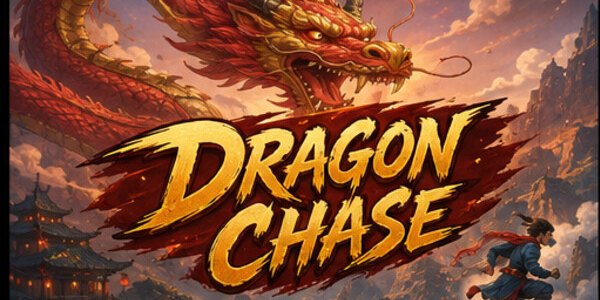
Dragon Chase is a slot from Quickspin, a studio known for story-driven bonus rounds. Check the stats below, then confirm them in the game's own info screen before you play for real money.
Game facts
Provider: Quickspin
RTP: Check in-game
Volatility: Medium
Maximum win: Check in-game
Main feature: Jackpot
Play responsibly
Operators can run different RTP versions of the same game, so the figure shown in your casino lobby may not match the one above. Always open the in-game info screen and confirm it yourself.
Set a deposit limit before you start and treat any win as a bonus, not an income.
- Provider
- Quickspin
- Default RTP
- See in-game info screen
- Volatility
- Medium
- Maximum win
- See in-game info screen
- Core mechanic
- Jackpot
- What Dragon Chase is
- How to work out a jackpot game's real return
- A worked example
- The eligibility check
- Seeded pots and why "due" is wrong
- Dragon Chase Rapid
- What is and isn't verified
- Judging the figure you find
- Jackpot games on this site
- Stake sizing in practice
- Where this fits in a session
- Common misconceptions
- Who this suits
- The three jackpot structures
- Reading the game panel
- The honest way to buy a jackpot ticket
- FAQ
What Dragon Chase is
Dragon Chase is Quickspin's jackpot slot, rated medium volatility and built around a progressive prize structure rather than a proprietary reel mechanic.
It is a rarity in this catalogue — a studio known for high returns and modest ceilings attaching a jackpot layer, which changes the maths in ways worth understanding before you play it.
How to work out a jackpot game's real return
This is the most useful thing on this page and it applies to every progressive slot you will ever open.
On an ordinary slot, the entire published return reaches players through gameplay. On a progressive, part of every bet is diverted into a prize pool. So the figure that describes your ordinary play — line wins, features, free spins — is the published return minus the jackpot contribution.
A 96% non-jackpot slot and a 96% jackpot slot return different amounts through normal play. The first returns 96%. The second returns 96% minus whatever funds the pot — and that money reaches exactly one player at a time, almost certainly not you. The headline figure hides the difference completely.
A worked example
Suppose a game publishes 96% and diverts 1% into a jackpot pool.
| Component | Of every $100 staked |
|---|---|
| Total returned to players | $96.00 |
| Diverted into the jackpot pool | $1.00 |
| Reaching you through ordinary play | $95.00 |
| Kept by the operator | $4.00 |
You are playing a 95% game with a lottery ticket attached, not a 96% game with a bonus. Whether that is a good trade depends entirely on how you value the ticket — and the contribution rate is very rarely published, which is why this page cannot tell you what it is here.
The scale of the effect varies enormously. Mega Moolah publishes 88.12% because its diversion is enormous; Divine Fortune publishes 96.59% because its diversion is small. Eight and a half percentage points between two progressives.
The eligibility check
The single most important item in the game panel of any jackpot slot: whether a minimum stake is required to qualify.
Some progressives exclude small bets from the top tier entirely. Playing below the qualifying stake means part of every bet still funds a prize you are structurally unable to win — the worst position available on any slot.
Others qualify every stake for every tier; Mega Moolah is the well-known example, and several of its record wins came from very small bets. The difference is decisive and never visible on the reels.
Find the rule before your first spin. If a qualifying stake exists and you cannot comfortably afford it, the game is not for you.
Seeded pots and why "due" is wrong
Most progressives are seeded: after a win, the pot restarts at a guaranteed minimum rather than at zero. That is why a jackpot never displays a trivial figure.
It also explains why the "due" instinct is wrong. A jackpot that has grown for weeks is a bigger prize, not a closer one. The trigger is random and independent of how long the pot has been building — nothing accumulates in your favour while the number climbs.
That intuition is powerful and worth resisting deliberately, because the displayed pot is designed to feed it. A large number on screen changes what you would win, never how likely you are to win it.
Dragon Chase Rapid
A second release, Dragon Chase Rapid, exists in the studio's portfolio. As with every variant pair on this site, it is a separate game with its own maths and its own jackpot configuration.
"Rapid" in jackpot naming conventions generally signals more frequent, smaller prizes — the same trade as Red Tiger's hourly drops against super drops. More frequent means each pot is smaller, because the same contribution funds more awards.
Check its figures independently. Shared naming is exactly the condition under which returns and jackpot rules get cross-attributed in third-party databases.
What is and isn't verified
| Figure | Status |
|---|---|
| Studio | Quickspin — confirmed, listed in the official portfolio |
| Volatility | Medium |
| Jackpot structure | Confirmed present |
| Return to player | Not verified — read the game panel |
| Jackpot contribution rate | Not published |
| Maximum win | No honest stake multiple exists for a pooled cash prize |
That last row is worth dwelling on. On a jackpot game the top prize is a cash amount that changes continuously, so any "maximum win" expressed as a stake multiple describes the non-jackpot ceiling. Sites that quote one for a progressive are describing a different thing from what the marketing implies.
Judging the figure you find
Quickspin's verified returns run 96.0% to 97.34% across the titles we have documented. Judge whatever the panel shows against that band.
Then subtract mentally for the jackpot contribution. If the panel reads 96% and the game carries a progressive, your ordinary-play return is lower than 96% — and how much lower is the question the panel probably will not answer.
Jackpot games on this site
| Game | Headline return | Jackpot cost |
|---|---|---|
| Mega Moolah | 88.12% | Enormous — ~$119 per $1,000 staked |
| Divine Fortune | 96.59% | Small, included in the figure |
| Rainbow Jackpots | Check in-game | Must Drop network, rate not published |
| Dragon Chase | Check in-game | Not published |
The top two rows are the useful comparison: same product category, eight and a half points apart. "Has a jackpot" tells you nothing about value on its own.
Stake sizing in practice
- Check jackpot eligibility first. Funding a prize you cannot win is the worst outcome on any slot.
- Read the return figure and whether it states that the jackpot contribution is included.
- Budget a small fixed amount and treat the jackpot as something that will not happen to you.
- Do not chase a large displayed pot. Bigger prize, same probability.
- If you want playing time rather than a jackpot shot, a non-progressive Quickspin title will last longer at the same headline figure.
Where this fits in a session
Dragon Chase is a lottery-ticket purchase with a medium-volatility slot around it. Played as that — a small fixed amount, bought for the possibility — it is a perfectly reasonable thing to do.
Played as a main game it is the weakest option in this catalogue, because the jackpot diversion sits on top of whatever the base return is. If you want Quickspin for value, Big Bad Wolf at a verified 97.34% with no jackpot layer is the opposite end of the range.
Common misconceptions
The first is that a jackpot is free upside. It is funded from your ordinary-play return on every spin.
The second is that a long-unwon jackpot is due. Bigger prize, unchanged odds.
The third is that all stakes qualify. Check — some tiers require a minimum bet.
Who this suits
This suits a player who wants a jackpot shot from a studio with generally strong returns, has checked the eligibility rules, and has budgeted a small fixed amount for it.
It suits poorly anyone playing for session length or value, and anyone who has not read the panel — on a progressive with an unpublished contribution rate, that check is doing more work than usual.
FAQ
What is Dragon Chase's RTP?
Not verified. Read the game panel and judge it against Quickspin's 96.0% to 97.34% band — then remember the jackpot contribution comes out of it.
How does a jackpot reduce my return?
Part of every bet funds the pool rather than reaching you through gameplay. A 96% game diverting 1% returns about 95% through ordinary play.
Do all stakes qualify for the jackpot?
Check the panel. Some progressives require a minimum qualifying bet, and playing below it funds a prize you cannot win.
Is a big jackpot more likely to drop?
No. A grown pot is a bigger prize, not a closer one. The trigger is random and independent of pot size.
Is Dragon Chase Rapid the same game?
No — a separate release with its own maths. "Rapid" generally signals more frequent, smaller prizes.
The three jackpot structures
Progressive slots come in distinct varieties and they behave very differently. Recognising which one you are looking at is worth more than knowing the pot size.
| Type | How it works | Example |
|---|---|---|
| Network progressive | Pooled across many casinos; grows until won; can reach millions | Mega Moolah |
| Must-drop | Guaranteed to award within a stated window; resets after each drop | Rainbow Jackpots |
| Local or in-game | Funded by one game or one operator; smaller, more frequent | Divine Fortune |
The trade across the three is consistent. Network progressives offer life-changing sums and take the largest bite out of your return — Mega Moolah's 88.12% is the extreme case. Local jackpots take a small bite and pay modest prizes; Divine Fortune's 96.59% barely differs from a non-jackpot slot.
Must-drop sits between them, with the added quirk that the guarantee is made to the network rather than to you.
Before deciding whether a jackpot slot is worth playing, work out which structure it uses. That tells you roughly how much of your return is being diverted, even when the contribution rate itself is unpublished.
Reading the game panel
- The jackpot qualification rules — whether a minimum stake is required, and for which tiers.
- The return figure, and whether it states the jackpot contribution is included.
- The jackpot structure — network, must-drop or local — which indicates how much is being diverted.
- The non-jackpot maximum win, which is the ceiling that applies to ordinary play.
- Which Dragon Chase you have opened, since a Rapid variant exists.
The first item is the one people skip and the one that costs most. Everything else is a matter of degree; funding a prize you are ineligible for is a straightforward loss.
The honest way to buy a jackpot ticket
Jackpot slots are not irrational purchases. They are badly framed ones, and the fix is a change of framing rather than avoidance.
Nobody buys a lottery ticket expecting a return. They buy a possibility, knowing the expected value is poor, and they spend a fixed small amount. Applied here, that means: decide an amount you are content to lose before opening the game, play it at a low stake, and stop when it is gone.
What does not work is treating a jackpot slot as your main game. The contribution comes out of every spin, so a long session on a progressive costs more than the same session on an equivalent non-jackpot title — and the jackpot itself remains a remote event throughout.
Split the two purposes. Play a well-priced game for the evening, and set aside a small separate amount for the ticket if you want one.
Read the return figure and the jackpot qualification rules in the game panel, budget a small fixed amount, expect not to win the jackpot, and set a deposit limit first. This page is information, not a recommendation to play.
Other Quickspin slots
 Pigs Turn Wild
Big Bad Wolf
Quickspin
 Megaways
Big Bad Wolf Megaways
Quickspin
 Expanding wilds
Sakura Fortune
Quickspin
 Sticky wilds
Sticky Bandits
Quickspin