Providers / Yggdrasil / Vikings Go to Hell
Vikings Go to Hell
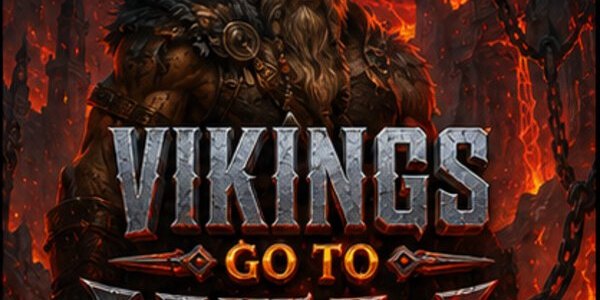
Vikings Go to Hell is a Yggdrasil slot built around rage meter & demon fights. The figures below use studio-published data where available; always confirm the exact RTP, limits and feature rules in the live game information panel.
Game facts
Provider: Yggdrasil
RTP: 96.1%
Volatility: High
Maximum win: Check in-game
Main feature: Rage meter & demon fights
Play responsibly
Operators can run different RTP versions of the same game, so the figure shown in your casino lobby may not match the one above. Always open the in-game info screen and confirm it yourself.
Set a deposit limit before you start and treat any win as a bonus, not an income.
- Provider
- Yggdrasil
- Default RTP
- 96.1%
- Volatility
- High
- Maximum win
- See in-game info screen
- Core mechanic
- Rage meter & demon fights
- What Vikings Go to Hell is
- The published numbers
- The base-game demon fights
- How the Rage collection works
- Treasure Chests
- The two-level Free Spins feature
- Sticky Wilds and respins
- How it differs from the earlier Vikings games
- Why the volatility is high
- What 96.1% costs in theory
- Stake sizing in practice
- Common misconceptions
- Who this suits
- FAQ
- What to check in the game panel
- Two Scatters are not the same as a full bonus trigger
- Where this fits in a session
What Vikings Go to Hell is
Vikings Go to Hell is Yggdrasil's 2018 third major entry in the Vikings series. It keeps the rage and fight ideas from the earlier games but moves combat into the base game as well as Free Spins. That matters because the feature system is no longer something you only see after a bonus trigger; ordinary spins can advance the same broader battle theme.
Yggdrasil lists a 96.1% RTP, High volatility and 25 paylines. The studio also publishes a currency-based maximum win, but because that is not a universal stake multiple we leave the top-line multiplier as “check in-game”.
The published numbers
| Item | Studio-published detail | What it means |
|---|---|---|
| RTP | 96.1% | 3.9% theoretical house edge |
| Volatility | High | More value is concentrated in stronger feature states |
| Paylines | 25 | Fixed left-to-right line evaluation |
| Release | May 2018 | Third major Vikings series title |
| Maximum win | Check in-game | Studio catalogue publishes a currency cap rather than a universal x figure |
The base-game demon fights
The biggest structural change from the earlier entries is that fights can occur before Free Spins. Yggdrasil states that landing two Scatter symbols can trigger a base-game fight. A successful Viking fight advances the Rage collection meter and the victorious Viking remains sticky for a single respin.
That one-respin persistence is deliberately shorter than the sticky state you can build in the bonus. It gives the base game a taste of the combat mechanic without allowing a Wild to sit indefinitely across paid spins. The key is to distinguish a feature respin from a new wager: the sticky position belongs to the triggered sequence, not to future independent bets.
How the Rage collection works
Winning fights add progress to the Vikings' Rage meters. Rage is a state-building mechanic, but it is not a player-controlled meter. You can observe progress; you cannot force the next qualifying fight. That makes it similar to other collection systems where visible state changes the feature landscape without turning reel timing into skill.
When a Viking reaches the appropriate enraged state, the game can make that character more powerful in the feature environment. The practical lesson is to read exactly what the meter guarantees and what it merely increases the chance of happening.
Treasure Chests
Treasure Chests can land on the fifth reel in both base play and Free Spins. Yggdrasil lists several possible awards: Free Spins, coin wins, extra Wilds and collection boosts. This makes the chest a multi-purpose random event rather than a single fixed prize.
Collection boosts are particularly important because they change future state rather than paying only on the current spin. An immediate coin win has obvious value; a meter boost has conditional value that depends on what it helps unlock later.
The two-level Free Spins feature
The Free Spins mode is split into two battle levels. The first pits the Vikings against the Lord of Chains. Defeating that boss advances the round to a second level with additional Wild power. The second level targets Lucifir, the commander of the underworld.
Yggdrasil says defeating Lucifir rewards the player by tripling the winnings from both Free Spins rounds. That creates an unusually clear end-state objective: early feature results can become more valuable if the later battle is completed successfully.
Do not mentally triple the running bonus total before the second-level condition is actually met. The displayed potential and the realised payout are different things.
Sticky Wilds and respins
Fight victories can convert important Viking symbols into Wilds. In the base game those Wilds can remain for a single respin; in the Free Spins environment sticky behaviour can last longer and interact with the boss progression. This is a classic example of the same symbol having different persistence rules in different game states.
Persistence increases the value of an early Wild because it has more future evaluations in which to contribute. That is why bonus quality depends not just on whether a fight is won, but when it is won.
How it differs from the earlier Vikings games
Vikings Go Wild introduced the fight-and-sticky-Wild identity. Vikings Go Berzerk made Rage collection a central progression device. Vikings Go to Hell combines those ideas and adds base-game fights, more frequent Treasure Chest interaction and a two-stage Free Spins battle.
So the sequel is not simply “more volatile Vikings”. It spreads the state mechanics across more of the game. That makes it more engaging to analyse but also easier to chase because there are more visible signs of progress.
Why the volatility is high
Several high-value conditions are nested inside one another: triggering fights, winning them, advancing Rage, building useful Wild positions, reaching the second Free Spins level and potentially completing the final boss condition. When strong outcomes require several favourable events in sequence, the distribution naturally becomes more uneven.
High volatility does not mean the game pays less than its RTP. It means the route to that long-run average contains wider short-term swings.
What 96.1% costs in theory
| Total turnover | House edge | Theoretical loss |
|---|---|---|
| $250 | 3.9% | ~$9.75 |
| $1,000 | 3.9% | ~$39 |
| $5,000 | 3.9% | ~$195 |
The table shows expected cost, not a guaranteed loss. Its main use is comparing configurations. If an operator offers a lower-RTP version, even a one-point reduction meaningfully increases the long-run cost of the same turnover.
Stake sizing in practice
This is a high-volatility progression game, so a session budget should assume that the impressive feature sequence may not occur. Pick the stake from the loss limit, not from the published maximum win. If the planned budget is small, reducing stake is the only direct way to increase the number of spins available before that fixed limit is reached.
Do not increase the bet because a Rage meter looks close to a threshold unless the rules explicitly explain how stored progress interacts with stake changes. Visible progress is not a licence to abandon the original budget.
Common misconceptions
- “Two Scatters mean Free Spins.” In this game two Scatters can trigger a base-game fight; read the separate Free Spins trigger rules.
- “A sticky Viking remains for future paid spins.” Base-game fight Wilds are tied to the feature respin, not an indefinite state.
- “The final triple is already mine once level two starts.” It depends on defeating the second-level boss condition.
- “A full-looking Rage meter means a big win is due.” Progress can unlock states, but the reel outcomes remain random.
Who this suits
Mechanically, Vikings Go to Hell suits players who enjoy visible progression, boss-style bonus structure and features that carry state across several evaluations. It is less suitable for someone who wants a simple, low-attention slot where every paid spin looks independent.
From an educational perspective it is a strong example of nested conditions: one feature can improve the probability or value of another without creating a predictable result.
FAQ
What is the RTP of Vikings Go to Hell?
Yggdrasil lists 96.1%. Check the in-game panel because operator builds can differ.
How volatile is the game?
Yggdrasil classifies it as High volatility.
Can fights happen in the base game?
Yes. The studio states that two Scatters can trigger a demon fight, with won fights advancing Rage and creating a sticky Wild for a respin.
What do Treasure Chests award?
Possible awards include Free Spins, coin wins, extra Wilds and collection boosts.
What happens in the second Free Spins level?
After clearing the first boss, the feature advances with additional Wild power. Defeating Lucifir in the second level can triple the winnings from both Free Spins rounds.
What to check in the game panel
- The RTP for the exact operator build.
- The Scatter requirements for base fights and Free Spins.
- How Rage is collected and whether any progress persists after leaving the game.
- The sticky-Wild duration in base fights versus Free Spins.
- The maximum stake and maximum-win rules.
Two Scatters are not the same as a full bonus trigger
One of the easiest mistakes on Vikings Go to Hell is to see two Scatters, watch a fight animation begin and assume the main Free Spins feature has triggered. Yggdrasil specifically uses two Scatters as a route into a base-game fight. That fight can award a sticky Wild for a respin and move the Rage collection forward, but it is not automatically the same event as entering the two-level Free Spins battle.
This is a useful example of why feature labels matter. Modern slots often use the same symbols to feed several mechanics: one count may start a respin, another may start Free Spins, and the resulting feature can in turn modify a collection meter. If you only watch the animation, those layers can blur together. The paytable separates them.
Keeping those states distinct also prevents “near bonus” thinking. A two-Scatter fight is an actual awarded feature with its own rules, not proof that a larger bonus was nearly due or that the next spin is more likely to trigger one. Once the respin sequence ends, the next paid spin should be treated according to the rules of the state that remains, not the excitement of the previous animation.
Where this fits in a session
Vikings Go to Hell is the most layered of the three Yggdrasil Vikings pages in this launch set. Its value as a guide is showing exactly where state persists, where it resets and which bonus conditions are genuinely earned rather than merely displayed as potential.
Confirm the live RTP and Rage rules, use a stake that fits a high-volatility session, and stop at the pre-set loss/time limit even if a meter looks close to completion. Progress graphics do not cancel the house edge.
Other Yggdrasil slots
 Rage meter
Vikings Go Berzerk
Yggdrasil
 Sticky wild fights
Vikings Go Wild
Yggdrasil
 Unlocking reels
Valley of the Gods
Yggdrasil
 Mystery win
Jokerizer
Yggdrasil