Providers / Yggdrasil / Vikings Go Wild
Vikings Go Wild
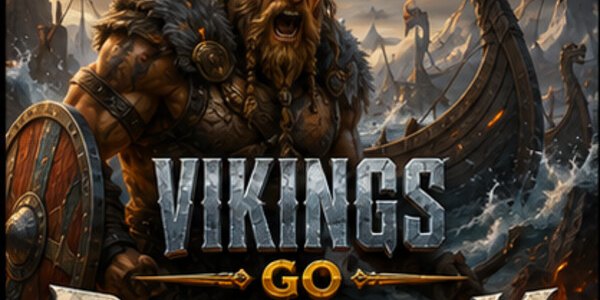
Vikings Go Wild is a Yggdrasil slot built around sticky wild fights. The figures below use studio-published data where available; always confirm the exact RTP, limits and feature rules in the live game information panel.

Game facts
Provider: Yggdrasil
RTP: 96.3%
Volatility: Low–Medium
Maximum win: Check in-game
Main feature: Sticky wild fights
Play responsibly
Operators can run different RTP versions of the same game, so the figure shown in your casino lobby may not match the one above. Always open the in-game info screen and confirm it yourself.
Set a deposit limit before you start and treat any win as a bonus, not an income.
- Provider
- Yggdrasil
- Default RTP
- 96.3%
- Volatility
- Low-Medium
- Maximum win
- See in-game info screen
- Core mechanic
- Sticky wild fights
- What Vikings Go Wild is
- The published numbers
- Free Spins and Viking fights
- How the sticky wilds change the bonus
- The Treasure Chest
- The volatility label needs context
- How the 25 paylines shape the game
- What 96.3% costs in theory
- Where it sits in the Vikings series
- Stake sizing in practice
- Common misconceptions
- Who this suits
- FAQ
- What to check in the game panel
- Where this fits in a session
What Vikings Go Wild is
Vikings Go Wild is one of Yggdrasil's early character-led slots, released in 2015 before the studio turned the same crew into a longer-running series. The original game uses five reels and 25 fixed paylines. Its important idea is not the Norse theme; it is what happens when a Viking wins a fight during the Free Spins feature.
Yggdrasil's own game page lists a 96.3% RTP and describes the title as Low–Medium volatility. That is worth recording because plenty of later reviews call the game high volatility, probably because the sticky-wild bonus can create sharply uneven results. For this page we use the studio's published label and treat the in-game information panel as the final authority for any operator-specific build.
The published numbers
| Item | Studio-published detail | What it means |
|---|---|---|
| RTP | 96.3% | 3.7% theoretical house edge before configuration differences |
| Volatility | Low–Medium | The studio label; individual sessions can still be uneven |
| Layout | 5 reels / 25 paylines | Traditional left-to-right line wins rather than ways or clusters |
| Release | August 2015 | The first major entry in Yggdrasil's Vikings line |
| Maximum win | Check in-game | The studio page publishes a currency cap rather than one universal stake multiple |
RTP is a long-run model, not a forecast for a session. At 96.3%, the arithmetic says the game is priced better than a 94% or 95% build, but it still carries a negative expected value. A short session can finish far above or far below the theoretical percentage.
Free Spins and Viking fights
The Free Spins mode is where the design earns its name. During the feature, the Vikings fight the sea monster. A successful fight can turn the victorious Viking into a Wild, and that Wild remains sticky for the rest of the Free Spins round. That persistence is the important part: one useful event can influence multiple later spins instead of paying once and disappearing.
Sticky symbols change the shape of variance because their value is path-dependent. A Wild acquired early has more opportunities to contribute than the same Wild acquired on the last spin. Two players who trigger the same nominal number of Free Spins can therefore experience very different bonus quality depending on when fights are won and where the Wilds land.
The trigger itself does not tell you much about the value of the bonus. The useful question is how early sticky Wilds are created and how many spins remain for them to work.
How the sticky wilds change the bonus
A normal Wild substitutes for ordinary paying symbols on the spin where it appears. A sticky Wild keeps occupying its position, so the same square can help form multiple paylines over multiple spins. That creates a compounding effect without changing the mathematics into a guaranteed win: a well-positioned Wild can still sit beside symbols that do not complete a line.
This is also why describing the feature as simply “free spins” undersells it. The real mechanic is state accumulation inside the bonus. The round can begin weak, improve after one or more Viking fights, and become materially stronger if those transformed Wilds arrive with enough spins left. The player does not control those outcomes, but understanding the sequence makes the results easier to interpret.
The Treasure Chest
Yggdrasil also gives the game a Treasure Chest feature. The studio describes it as a source of mystery wins and a possible route to additional Free Spins. That makes it a secondary feature rather than the core engine: it can add value or extend a round, but the sticky Viking Wilds are what create the game's recognisable bonus profile.
Mystery awards are easy to over-read because the value is hidden until the feature resolves. Hidden does not mean strategically selectable, and there is no evidence that timing a spin or stopping at a certain point changes the random outcome. Treat the chest as another random branch in the paytable, not as a skill element.
The volatility label needs context
There is a useful discrepancy around Vikings Go Wild. Yggdrasil currently lists the game as Low–Medium volatility, while a number of review databases describe it as high. The studio is the stronger source for the formal label, but the disagreement tells you something important: volatility categories are broad labels rather than a universal measurement system.
A sticky-wild bonus can create long stretches of ordinary base-game results followed by a much stronger feature. That experience can feel “high variance” even when the developer's internal classification is lower. Use the label as a rough description and judge the game by your own stake size, session budget and tolerance for feature dependence.
How the 25 paylines shape the game
This is a conventional payline slot. Wins are evaluated on 25 defined lines from the left rather than across hundreds of ways. That makes the win logic easier to audit in the paytable: you can see which reel positions belong to each line and how many matching symbols are required.
Paylines do not make the game safer or more predictable. They simply define how combinations are counted. The reason the distinction matters is educational: a 25-line game and a 243-ways game may show similar reel artwork while using very different win evaluation. Always read the “ways/lines” section before comparing hit rates or symbol behaviour between titles.
What 96.3% costs in theory
| Total turnover | House edge | Theoretical loss at 96.3% |
|---|---|---|
| $250 | 3.7% | ~$9.25 |
| $1,000 | 3.7% | ~$37 |
| $5,000 | 3.7% | ~$185 |
Turnover is the number that matters here, not the size of one deposit. Re-staking returned money can make a modest starting balance generate far more total wagering than expected. The table is not a prediction of what you will lose; it is the long-run price implied by the published RTP.
Where it sits in the Vikings series
Vikings Go Wild established the characters and fight idea. Vikings Go Berzerk later made the rage meters more central and persistent, while Vikings Go to Hell expanded the fights into the base game and a two-stage bonus structure. Looking at the three together shows Yggdrasil iterating on one mechanic rather than simply reskinning the same math.
If you prefer the simplest version of the series, this original is the cleanest to read. If you want more progression and visible state, the later games add it. None of those feature differences remove the house edge, so the better choice is the mechanic you understand and can budget for rather than the one with the most dramatic animation.
Stake sizing in practice
Because the feature's best outcomes depend on accumulating sticky Wilds, a session built around only a handful of spins tells you almost nothing about how the game behaves. That does not mean chasing a bonus. It means setting the stake low enough that the planned number of spins fits inside a fixed loss limit from the start.
For example, if a session budget is $50, a $1 stake exposes the entire budget in only 50 losing spins. A $0.20 stake gives five times as many decisions before the same nominal outlay is reached. Lowering the stake does not improve RTP, but it changes how quickly variance can consume a budget.
Common misconceptions
- “Sticky Wilds mean the bonus gets better every spin.” They can improve the state, but only if fights are won and the Wild positions connect with paying symbols.
- “A mystery chest can be timed.” It is a random award, not a reaction game.
- “96.3% means I should get $96.30 back from $100.” RTP is calculated across very large samples, not one bankroll.
- “Low–Medium means low risk.” The label is relative and the bonus can still create significant short-run swings.
Who this suits
From a mechanics perspective, Vikings Go Wild suits players who prefer a traditional reel grid but want a bonus with visible state. You can understand why a feature becomes stronger without needing to track dozens of modifiers. The game is less suitable for anyone looking for modern cluster pays, buy bonuses or extremely large published win multiples.
The main educational value is the sticky-Wild sequence: it is a clear example of how persistence inside a bonus changes the distribution of outcomes without giving the player control over them.
FAQ
What is the RTP of Vikings Go Wild?
Yggdrasil currently lists 96.3%. Check the in-game rules because operator configurations can differ.
How volatile is Vikings Go Wild?
Yggdrasil's own listing says Low–Medium. Some third-party databases describe it as higher, which is why the operator's game panel is worth checking.
What happens in Free Spins?
Vikings can fight the sea monster. Successful Vikings become sticky Wilds that remain for the rest of the feature.
What does the Treasure Chest do?
It can award a mystery win and may also award additional Free Spins.
Is there a strategy that improves the RTP?
No documented player decision changes the mathematical return. Stake size and session limits manage exposure, not the house edge.
What to check in the game panel
- The RTP shown for the exact operator build.
- The developer's volatility label in that version.
- The 25 payline map and Wild substitution rules.
- How many scatters trigger Free Spins and how extra spins are awarded.
- Any maximum-win or stake restrictions applied by the operator.
Where this fits in a session
Vikings Go Wild is best understood as an older, relatively readable feature slot. Its 96.3% studio RTP is respectable by modern standards, but the important lesson is not that percentage alone. Sticky Wilds make bonus quality depend on when state is accumulated, so individual features can look nothing like the long-run average.
Confirm the RTP and volatility in the live game panel, set a loss limit and a time limit, and choose a stake that fits the whole planned session. This page explains the mechanics; it is not a recommendation to gamble.
Other Yggdrasil slots
 Rage meter
Vikings Go Berzerk
Yggdrasil
 Unlocking reels
Valley of the Gods
Yggdrasil
 Mystery win
Jokerizer
Yggdrasil
 Feature-pick Free Spins
Golden Fish Tank
Yggdrasil