Providers / Relax Gaming
Relax Gaming
Both an aggregator and a studio in its own right, best known for a franchise that made bonus-buy slots mainstream.
IN SHORT
Relax Gaming is a slot studio known for the money train series and dream drop jackpots. Across the 10 titles covered here, standard return figures run 96.1%–96.4%, with volatility rated high.
Return percentages are the studio's default configurations. Most large suppliers ship several reduced versions of the same game to operators, so always confirm the figure in the game's own information screen before playing.
- Games covered 10
- RTP range 96.1%–96.4%
- Known for The Money Train series and Dream Drop jackpots
- Who Relax Gaming are
- Two businesses in one badge
- The Money Train engine
- The special symbols explained
- Bonus buys and the 100x decision
- Their licensed Megaways work
- RTP configurations
- Catalogue map
- Volatility profile
- Why the sequels keep escalating
- Bankroll maths
- Strengths and weaknesses
- Dream Drop jackpots
- FAQ
Who Relax Gaming are
Relax Gaming was founded in 2010 and is headquartered in Malta, with offices across Estonia, Serbia, Finland, Sweden and Gibraltar, and development studios in Belgrade, Novi Sad, Malmö and Stockholm. It began life in poker and bingo rather than slots — its first products were a fast-fold poker network and later the HexaPro format — which is an unusual origin for a studio now best known for one of the most volatile slot series on the market.
Ownership sits with Kindred Group, the operator behind Unibet among other brands. Kindred had been a major shareholder for years before completing a full acquisition on 1 October 2021 for around 320 million euros, with management retaining a minority stake at the time and the business run as an independent unit.
The chain has since lengthened. French operator FDJ completed its roughly 2.45 billion euro takeover of Kindred in October 2024, so Relax now sits inside FDJ's group as its business-to-business content arm. Corporate ownership two levels up rarely changes how a slot plays, but it does affect which markets the studio prioritises and how conservatively it treats compliance — an operator-owned supplier has more to lose from a regulatory problem than an independent one.
That operator ownership is worth noting for one reason: a supplier owned by a betting operator has a structural relationship with the market it sells into. It has not visibly changed Relax's content, but it is a fact worth knowing when you read that a studio is "independent" — Relax is independent in operation, not in ownership.
Two businesses in one badge
Relax runs two distinct operations, and confusing them makes their catalogue impossible to read.
- Own content. Games built in Relax's studios — the Money Train series, Temple Tumble, Hellcatraz and the rest of what we list on this page.
- Aggregation and platform. Through programmes branded Silver Bullet and Powered By, Relax distributes and hosts content from many third-party studios, giving smaller developers access to operators they could not reach alone.
The practical consequence is the same one that applies to Games Global: a game reaching your lobby through Relax is not necessarily a Relax game. Print Studios and various other independents work through the platform. If a title badged Relax plays nothing like Money Train, that is why — check the developer name in the info screen.
The Money Train engine
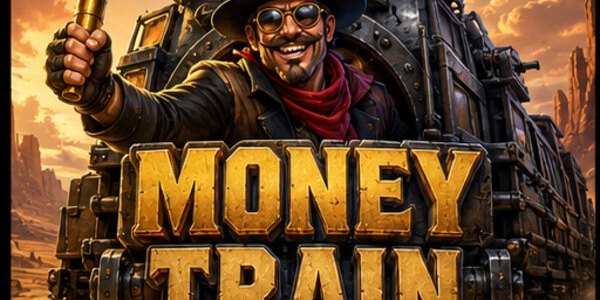
Money Train is the studio's defining work and one of the most imitated designs of the last five years. Money Train 2, released in 2020, is the title that made the series famous, and Money Train 3 and 4 have followed.
The base game is deliberately unremarkable — a fairly standard reel game whose job is to produce the bonus trigger. Everything the series is known for happens in the Money Cart round, which is not a free spins round in the usual sense. When it triggers, the reels are replaced entirely: symbols disappear except for special value symbols, and you get a small number of respins that reset each time a new symbol lands.
Every symbol carries either a cash value or a function. The round ends when the respins run out, and your win is the total of all collected values applied to your stake. This structure is why the series can advertise ceilings in the tens of thousands times stake — the values compound through the interaction of the functional symbols.
The special symbols explained
Understanding the symbol types is the difference between watching the round and reading it.
| Symbol type | What it does | Why it matters |
|---|---|---|
| Payer | Adds its own value to every collector on the grid | Multiple payers with a collector present is where value compounds |
| Collector | Gathers the values of all other symbols into itself | Arriving late in a full grid is the ideal case |
| Persistent | Repeats its action on every subsequent respin | A persistent payer or collector transforms the round |
| Sniper / Necromancer types | Copy, upgrade or resurrect other symbols | Turn small values into large ones mid-round |
| Value symbols | Fixed cash amounts | The raw material everything else operates on |
The reason rounds are so bimodal is combinatorial. A grid of plain value symbols produces a modest total. The same grid with a persistent collector and two payers can produce something orders of magnitude larger. Most rounds are the former.
Bonus buys and the 100x decision
The Money Train series is built around the purchase button, and the standard buy price is in the region of 100x your stake, with some titles offering more expensive enhanced entries.
Because the base game is designed to be uninteresting, buying is close to the intended way to play — which is exactly the problem. At a two-dollar stake, a 100x buy is two hundred dollars for a round that most often returns well under its cost. The return on purchased rounds is engineered to sit near the game's overall figure, so buying does not improve your position; it removes the several hundred base-game spins that would otherwise have spread your budget over an hour.
100x at $0.50 is $50. 100x at $5 is $500. The multiplier presentation makes an enormous bet look like a small number. If the cash figure would make you hesitate, that is the accurate reaction and the multiplier display was hiding it.
Feature buys are restricted or prohibited in several regulated markets. Where blocked, these games become considerably harder to enjoy, because the base game was never the point.
Their licensed Megaways work
Temple Tumble Megaways is Relax's best-known licensed Megaways title, and it is a good example of how much licensed implementations differ from Big Time Gaming's originals. Rather than variable reel heights alone, it uses a tumbling grid where blocks are destroyed to open up the playing area, changing the ways count as the sequence progresses.
If you like the Megaways mechanic, it is worth playing this alongside Bonanza to feel the difference. Same badge, meaningfully different game.
RTP configurations
Standard returns across the catalogue sit around the mid-96% mark, with variation by title. Relax supplies multiple configurations to operators like everyone else at this scale, so lower builds are deployed in some lobbies.
On bonus-buy games there is usually more than one figure published: one for base play and one for the purchase. Read the one that matches how you intend to play. If you only ever buy, the base-game percentage is not your number.
Catalogue map
| Title | Core mechanic | What to expect |
|---|---|---|
| Money Train | Money Cart respin round with special symbols | Thin base game, everything in the bonus |
| Money Train 2 | Expanded symbol set, persistent types | The series breakout; very high ceiling |
| Money Train 3, 4 | Further symbol types and enhanced buys | Escalating volatility with each entry |
| Temple Tumble Megaways | Block-destruction tumbling grid | High variance; distinct from standard Megaways |
| Hellcatraz | Cluster-style grid with multiplier symbols | Extreme variance, very high advertised ceiling |
| Snake Arena, Marching Legions | Cluster and expanding grid features | High variance, feature-dependent |
| Iron Bank, Dead Man's Trail | Collect and respin structures | Money Cart lineage in different clothing |
Volatility profile
Relax's own content sits at the harsh end of the market, close to Nolimit City territory on the flagship titles. The design philosophy is explicit: minimal base game, everything concentrated in a purchasable bonus with an enormous ceiling.
In a real session without buys, expect the trigger to feel rare — a few hundred spins between rounds is normal — and expect most triggered rounds to come in below what the wait cost. That is not a malfunction; it is the arithmetic of putting a five-figure ceiling on a 96% game.
The corollary is that these games punish small bankrolls specifically. A budget that covers fifty spins or half a buy is not enough to see the game at all.
Why the sequels keep escalating
Each Money Train entry has added symbol types and pushed the ceiling higher, and there is a straightforward reason: the market rewards it. Higher advertised maximums generate more attention, more streamed clips and more feature-buy volume.
What it means for you is that the newest entry is not the friendliest. Later titles concentrate the return even further into rare outcomes, so the trade-off is always the same — a bigger headline number bought with a longer, thinner distribution. If you want the series at its most playable, the earlier entries are gentler; if you want the biggest ceiling, be honest that you are choosing the harshest maths in the set.
Bankroll maths
- Decide whether you are buying or spinning before you deposit. They need completely different budgets.
- If spinning: divide the budget by at least 300 spins. A $150 budget means around $0.50 per spin, not $2.
- If buying: count each buy as 100 spins of budget. Three buys is 300 spins spent in three minutes, with far less to show for it.
- Set the walk-away number for wins too. A good Money Cart round can be handed back in a handful of buys.
- Never chase a bad run of buys. Each round is independent; a sequence of poor rounds carries no information about the next.
Strengths and weaknesses
Strengths. The Money Cart round is one of the genuinely great pieces of modern slot design, with real depth to how the symbols interact; strong production values; the aggregation platform gets good small studios into major lobbies; the licensed Megaways implementation is a legitimately different take rather than a copy.
Weaknesses. Base games are deliberately hollow, which makes the games close to unplayable without buys; buy prices are high and presented as multipliers that disguise the cash cost; the sequels escalate volatility with each release; and the Relax badge covers third-party content whose quality and maths the studio did not set.
FAQ
Who owns Relax Gaming?
Kindred Group, the operator behind Unibet and other brands, which completed its acquisition in October 2021. The business runs as an independent unit.
What is the Money Cart round?
A bonus round that replaces the reels entirely with value and function symbols, awarding respins that reset each time a new symbol lands. Your win is the total collected, and the interaction between payer, collector and persistent symbols is where large results come from.
Is buying the Money Train bonus worth it?
Not in expected-return terms — the purchased round is calibrated near the game's overall figure. It removes hundreds of base-game spins from your session and concentrates the outcome into one event.
Which Money Train is the most playable?
Generally the earlier entries, because each sequel has pushed the ceiling higher and the distribution thinner. The newest is the most extreme, not the most forgiving.
Is every game in Relax's lobby made by Relax?
No. The Silver Bullet and Powered By programmes distribute and host third-party studios' games, which have their own maths and return configurations.
Dream Drop jackpots
Dream Drop is Relax's progressive jackpot network, layered on top of otherwise normal slots rather than confined to dedicated jackpot titles. Five tiers run from a frequently-hit small prize up to a Dream tier that has produced multi-million payouts and a number of millionaires since launch.
The mechanics are worth understanding because they differ from a classic jackpot slot. The jackpot is a separate feature triggered independently of the base game, entered through a jackpot bonus round where you reveal values until a tier is awarded. Because it sits on top of an existing game, the same title can appear in a lobby with or without Dream Drop attached depending on the operator.
The trade-off is the same as with any progressive. A slice of every bet funds the network, so the day-to-day return you experience on a Dream Drop version is lower than the plain version of the same game. Higher stakes generally improve your qualification odds for the larger tiers, which is exactly the incentive structure to be careful with — the temptation is to bet above your plan to chase a tier you are still overwhelmingly unlikely to reach.
If you specifically want the jackpot, play it knowingly and at a stake you had already decided on. If you want the base game, check whether a non-jackpot version of the title is available in your lobby, because it will usually pay better in ordinary play.
Read the return figure that applies to your mode of play, convert every buy price into cash before tapping it, size a spinning session for several hundred spins, and set a deposit limit first. This page is information, not a recommendation to play.
Relax Gaming slots
 Bonus buy
Money Train
Relax Gaming
 Bonus buy
Money Train 2
Relax Gaming
 Bonus buy
Money Train 3
Relax Gaming
 Bonus buy
Money Train 4
Relax Gaming
 Megaways
Temple Tumble Megaways
Relax Gaming
 Multiplier symbols
Hellcatraz
Relax Gaming
 Cluster
Snake Arena
Relax Gaming
 Respins
Marching Legions
Relax Gaming
 Bonus buy
Iron Bank
Relax Gaming
 Collect
Dead Man's Trail
Relax Gaming
Operators often run more than one RTP version of the same game. Figures marked “Check in-game” have not been verified for this site yet — always confirm in the game's own info screen.