Providers / Relax Gaming / Temple Tumble Megaways
Temple Tumble Megaways
Temple Tumble Megaways is a slot from Relax Gaming, a studio known for the money train series and dream drop jackpots. Check the stats below, then confirm them in the game's own info screen before you play for real money.

Game facts
Provider: Relax Gaming
RTP: 96.25%
Volatility: High
Maximum win: 7,776x
Main feature: Megaways
Play responsibly
Operators can run different RTP versions of the same game, so the figure shown in your casino lobby may not match the one above. Always open the in-game info screen and confirm it yourself.
Set a deposit limit before you start and treat any win as a bonus, not an income.
- Provider
- Relax Gaming
- Default RTP
- 96.25%
- Volatility
- High
- Maximum win
- 7,776x
- Core mechanic
- Megaways
- What Temple Tumble Megaways is
- The demolition mechanic
- How the ways count grows
- Free spins and the three modifiers
- A 7,700x ceiling — the gentlest in the catalogue
- The published numbers
- The Dream Drop version is a different game
- What a Dream Drop jackpot costs you
- Stake sizing in practice
- Against the Money Train series
- Where this fits in a session
- Common misconceptions
- Who this suits
- A licensed engine — what that means
- Why the ceiling is 7,776x
- FAQ
What Temple Tumble Megaways is
Temple Tumble Megaways is Relax Gaming's 2019 jungle-temple slot and one of the studio's most enduring titles. Return is 96.25%, volatility is high, and the maximum win is 7,700x your stake.
It runs a licensed Megaways engine, but with a genuinely distinctive twist: as you win, the temple physically demolishes, opening the grid and increasing the ways available within the same spin.
The demolition mechanic
The grid begins partially blocked. Stone blocks occupy positions, restricting how many symbols can appear and therefore how many ways to win are active.
Tumbling reels remove winning combinations, and as they do the temple blocks are progressively destroyed. Each destroyed block opens a position, and each opened position increases the ways count for the remainder of that spin sequence.
So a spin that keeps winning does not just cascade — it expands. The grid you finish a sequence on is materially larger than the one you started it on.
On a standard Megaways title, reel heights are set at the start of a spin and cascades feed a grid of fixed dimensions. Here the dimensions grow as you win, so a long sequence increases both the number of chances and the size of the board they play out on. It is the same architecture as Big Time Gaming's Megaclusters, applied to a demolition theme.
How the ways count grows
The starting configuration is heavily restricted and the fully demolished grid offers tens of thousands of ways — the standard licensed Megaways engine reaches 117,649 at maximum, and this game's blocked-grid design means you begin well below that and work upward.
As on every Megaways title, the ways count does not improve your odds. The paytable is calibrated to it, so more paths mean each path pays proportionally less.
What the expansion genuinely does is increase how often a winning combination lands within that sequence — which matters because it keeps the demolition going, which opens more positions, which increases the ways again.
Free spins and the three modifiers
The bonus round is triggered by clearing enough of the temple, and it offers a choice of modifiers — the game's most player-facing feature.
Options typically include variations on more free spins with fewer enhancements, or fewer spins with stronger ones. The specific counts and modifier effects vary between builds and regional versions, so read the paytable in your version.
The principle behind choosing is the same as on every game offering this decision: you are selecting a variance profile, not extra value. The options are balanced to similar expected returns. More spins with weaker modifiers pays more reliably; fewer spins with stronger ones has the higher top end.
If the budget is nearly gone, take the reliable option. If you are specifically chasing the ceiling, take the aggressive one. Decide before the screen appears rather than during it.
A 7,700x ceiling — the gentlest in the catalogue
7,700x is small by Relax Gaming's standards and that is worth framing properly rather than reading as a weakness.
| Relax Gaming title | Return | Ceiling |
|---|---|---|
| Temple Tumble Megaways | 96.25% | 7,700x |
| Hellcatraz | 96.13% | 51,840x |
| Money Train 2 | 96.40% | 50,000x |
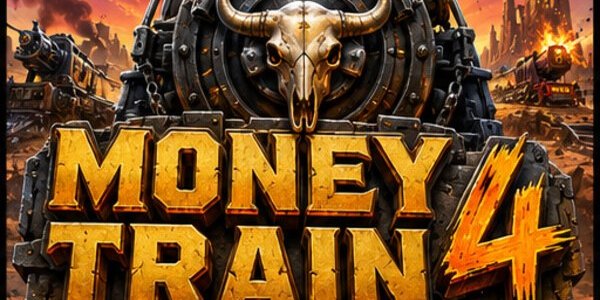
| Money Train 4 | 96.16% | 150,000x |
Because less of the return is parked in the tail, more of it is available for the outcomes you will actually experience. Temple Tumble is consequently the most playable game in this studio's flagship range on a normal bankroll — the Money Train titles concentrate their maths in a rare bonus, and this one distributes it more evenly through cascading base play.
The published numbers
| Statistic | Figure |
|---|---|
| Return | 96.25% |
| Maximum win | 7,700x |
| Volatility | High |
| Engine | Licensed Megaways with expanding demolition grid |
| Bonus | Free spins with a choice of modifiers |
| Released | 2019 |
The Dream Drop version is a different game
A separate release exists — Temple Tumble Dream Drop — and it is genuinely a different product, not a mode within this one.
| Temple Tumble Megaways | Temple Tumble Dream Drop | |
|---|---|---|
| Return | 96.25% | 96.10% |
| Maximum win | 7,700x | 25,000x |
| Jackpots | None | Five progressive tiers |
| Top jackpot | — | Mega, often £750,000+ at peak |
The Dream Drop network is Relax Gaming's progressive jackpot system, and the studio states it has created over 20 millionaires since 2022. The tiers run from a small, frequently-hit Rapid up to the Mega.
Check which version your lobby has loaded — the artwork is closely related and the maths is not.
What a Dream Drop jackpot costs you
The principle applies to every progressive and it is worth restating here because the two versions sit side by side in most lobbies.
On a jackpot game, a slice of every bet is diverted into the prize pool. That money does return to players — but to one player at a time, rather than through your gameplay. So your ordinary-play return is lower than the headline figure suggests.
The Dream Drop version publishes 96.10% against the standard game's 96.25%. Part of that gap, plus whatever contribution sits inside the 96.10%, is the price of the jackpot ticket.
That is a far smaller premium than Mega Moolah's, which charges roughly eight percentage points for its progressive. But it is a premium, and if the jackpot is not why you are playing, the standard version returns more.
Stake sizing in practice
- Budget 250 to 300 spins. This is the most forgiving of Relax's flagship titles, so a modest bankroll gets a fair sample.
- Count button presses, not cascades — one spin can produce a long demolition sequence and feel like several.
- Decide your free spins modifier preference before the choice screen appears.
- Confirm which version you have opened if a Dream Drop variant is in the lobby.
- Remember the grid resets fully between spins — demolition progress does not carry.
Against the Money Train series
These are the two poles of Relax Gaming's catalogue and they are worth contrasting directly.
Money Train concentrates nearly all of its return into one rare bonus round, producing a thin base game and enormous ceilings. Temple Tumble distributes its return through cascading base play with a modest ceiling.
Neither is more generous — both sit around 96.2%. What differs is where the money is. If you want a game that pays you as you play, this one. If you want a game that pays once, spectacularly or not at all, the Money Train titles.
Where this fits in a session
Temple Tumble Megaways is the base-layer game in this catalogue: decent return, an active mechanic, a ceiling small enough that the maths stays in the outcomes you will see.
It works well as the bulk of an evening with short bursts on something extreme if you want a chase. Six years after release it remains the most sensible Relax title for a normal bankroll, which is not something the studio's marketing will tell you.
Common misconceptions
The first is that a bigger ways count improves your odds. The paytable is scaled to it.
The second is that demolition progress carries between spins. It does not — the temple rebuilds fully each spin.
The third is that the Dream Drop version is the same game with a jackpot bolted on. It has a different return, a different ceiling and a jackpot contribution built into its maths.
Who this suits
This suits a player who wants an active, watchable game on a modest budget, and who prefers a return delivered through play rather than gated behind a rare round.
It suits less well anyone chasing a large multiple — 7,700x is the trade for how playable it is — and anyone who specifically wants the Relax bonus-buy experience, which lives in the Money Train series instead.
FAQ
How does the demolition mechanic work?
Tumbling reels remove winning combinations and progressively destroy temple blocks, opening positions and increasing the ways to win within that spin sequence.
What is the maximum win?
7,700x your stake — modest by this studio's standards, which is why more of the return reaches ordinary play.
Which free spins modifier should I choose?
They are balanced to similar returns. More spins with weaker modifiers pays more reliably; fewer with stronger ones has the higher top end.
Is Temple Tumble Dream Drop the same game?
No. It returns 96.10%, caps at 25,000x, and carries five progressive jackpot tiers funded by a contribution from every bet.
Does the temple stay demolished?
No. The grid rebuilds fully at the start of every spin.
A licensed engine — what that means
Megaways is Big Time Gaming's intellectual property, licensed to dozens of studios. Relax builds this title on that engine under licence, exactly as Pragmatic Play, Blueprint and Red Tiger do with theirs.
A Megaways label tells you reel heights vary between spins and the ways count is recalculated each time. It tells you nothing about the return, the ceiling, the volatility or the bonus structure — all of which are set by the licensee. Two Megaways games at nearly identical RTPs can differ by a factor of ten on maximum win.
Which is why comparing Megaways titles by their badge is useless and comparing them by their figures is not.
Why the ceiling is 7,776x
7,776 is not a marketing figure. It is 6 to the power of 5, a number falling directly out of the game's maths model. The 46,656 maximum ways is 6 to the power of 6.
Oddly precise ceilings usually indicate a calculated figure rather than a rounded one — the same reason Big Time Gaming's famous 117,649 is 7⁶. Compare with the round numbers across the Money Train series: 20,000x, 50,000x, 100,000x, 150,000x. Those are targets chosen for a poster; these fall out of the structure.
Practically, 7,776x is modest by modern standards, and that is exactly why the base game here is livelier than this studio's flagship series. Less money in the tail means more of it in the outcomes you will actually see — the same trade Wild Swarm makes with its 3,100x cap.
Check the return figure in the game information, confirm whether you have opened the standard or Dream Drop version, budget around 250 spins counted as button presses, and set a deposit limit first. This page is information, not a recommendation to play.