Providers / Yggdrasil / Holmes and the Stolen Stones
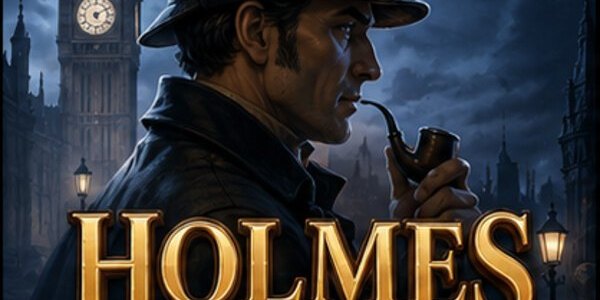
Holmes and the Stolen Stones
Holmes and the Stolen Stones is a slot from Yggdrasil, a studio known for series slots and multiplier ladders. Check the stats below, then confirm them in the game's own info screen before you play for real money.
Game facts
Provider: Yggdrasil
RTP: 96.8%
Volatility: Medium
Maximum win: Check in-game
Main feature: Jackpot
Play responsibly
Operators can run different RTP versions of the same game, so the figure shown in your casino lobby may not match the one above. Always open the in-game info screen and confirm it yourself.
Set a deposit limit before you start and treat any win as a bonus, not an income.
- Provider
- Yggdrasil
- Default RTP
- 96.8%
- Volatility
- Medium
- Maximum win
- See in-game info screen
- Core mechanic
- Jackpot
- What Holmes and the Stolen Stones is
- A jackpot slot that still returns 96.8%
- Why this jackpot costs so little
- Five progressive jackpots
- The eligibility check
- The published numbers
- Medium volatility and the jackpot combination
- How to judge any jackpot slot in thirty seconds
- Stake sizing in practice
- Where this fits in a session
- Common misconceptions
- Who this suits
- Yggdrasil's positioning
- Reading the game panel
- Where this fits in a session
- Coins versus stake multiples
- FAQ
What Holmes and the Stolen Stones is
Holmes and the Stolen Stones is Yggdrasil's Sherlock Holmes slot: five reels, 20 paylines, a return of 96.80%, medium volatility, and five progressive jackpot tiers.
That combination is unusual enough to be the subject of this page. Almost every jackpot slot we cover pays for its prize pool with a visibly reduced return. This one does not.
A jackpot slot that still returns 96.8%
| Jackpot game | Headline return | Cost per $1,000 staked |
|---|---|---|
| Holmes and the Stolen Stones | 96.80% | ~$32 |
| Divine Fortune | 96.59% | ~$34 |
| Rainbow Jackpots | Check in-game | Not published |
| Mega Moolah | 88.12% | ~$119 |
Nearly nine percentage points separate the top and bottom rows — two games in the same product category, one costing almost four times as much per dollar staked as the other.
At 96.80% this game returns more than most non-jackpot slots released in the last five years, while still carrying five progressive tiers.
Why this jackpot costs so little
The mechanism is straightforward once you see it: the size of the prize determines the size of the diversion.
Mega Moolah's Mega jackpot is seeded at €1,000,000 and has paid out eight figures. Funding prizes at that scale requires taking an enormous slice from every bet across the network, which is exactly why its return is 88.12%.
Holmes's jackpots are local and modest by comparison — reported in the region of 30,000 coins at the top tier rather than millions. A smaller pool needs a smaller contribution, so very little is removed from ordinary play.
You cannot have a life-changing jackpot and a strong return in the same game. The money has to come from somewhere and there is only one place it can come from. When you see a slot advertising both a huge progressive and a good RTP, one of those two claims is doing something you should check.
Five progressive jackpots
The game carries five tiers, awarded through a gem-matching bonus round rather than at random. Reaching the round and matching sufficient stones is what triggers a tier.
That structure differs from the random-trigger progressives elsewhere on this site — Mega Moolah's wheel appears on any spin regardless of what the reels do. Here the jackpot sits behind a feature you have to reach first.
Exact tier values, matching requirements and trigger conditions vary between builds and operators, so read the paytable in your version.
The eligibility check
The standard progressive question applies here as everywhere: does a minimum stake qualify for all five tiers?
Some progressives exclude small bets from the top tier. Playing below a qualifying stake means part of every bet funds a prize you cannot win — the worst position available on any slot.
Find the rule in the game panel before your first spin. On a game where the jackpot contribution is small, this matters less than it does on Mega Moolah — but it still matters, and it takes fifteen seconds.
The published numbers
| Statistic | Figure |
|---|---|
| Return | 96.80% |
| Volatility | Medium (some sources say low) |
| Paylines | 20 |
| Jackpots | Five progressive tiers via a gem-matching bonus |
| Top prize reported | Around 30,000 coins |
Medium volatility and the jackpot combination
Medium volatility plus a 96.80% return plus five jackpot tiers is a genuinely rare combination, and it is worth understanding why.
A game cannot be medium volatility with a huge ceiling — the tail has to be funded from the middle, which is what makes a game volatile. Holmes's jackpots are small enough not to hollow out the distribution, so the base game stays active and a bankroll lasts.
Yggdrasil's catalogue is described as deliberately medium-to-high overall, with no tracked title exceeding a volatility rating of 6 — the studio explicitly targets the zone between frequent engagement and meaningful win potential rather than the extreme designs of studios like Nolimit City.
This game sits at the gentle end of that already-moderate range, which makes it one of the more sustainable jackpot slots available.
How to judge any jackpot slot in thirty seconds
- Read the published return. If it is materially below 96%, a large diversion is happening.
- Look at the top prize size. Millions means a big diversion; thousands means a small one.
- Check the eligibility rule. Whether your stake qualifies for every tier.
- Check the trigger type. Random on any spin, or gated behind a feature you must reach.
- Decide what you are buying. A ticket, or a game with a small bonus attached.
Those five items separate a Divine Fortune or a Holmes — a decent game with a modest prize layer — from a Mega Moolah, which is a lottery ticket with a slot wrapped around it. Both are legitimate purchases; they are not the same purchase.
Stake sizing in practice
- Check jackpot eligibility before your first spin.
- Budget 250 to 300 spins; medium volatility and a good return support a proper session.
- Treat the jackpots as unlikely, because they are — but note the diversion funding them is small here.
- Do not chase a grown pot. Bigger prize, unchanged odds.
- Set a time limit as well as a loss limit.
Where this fits in a session
This is the rare jackpot slot that works as a main game rather than a ticket purchase. At 96.80% with medium volatility, you can play it for an evening without paying a premium for the progressive layer.
If you want a bigger prize, Mega Moolah exists and costs $119 per $1,000 staked instead of $32. That is the honest comparison, and which side of it suits you depends entirely on whether you are buying a game or a ticket.
Common misconceptions
The first is that all jackpot slots have poor returns. This one returns more than most non-jackpot releases.
The second is that a jackpot tier is due after a long gap. Bigger prize, same probability.
The third is that five tiers means five chances. They are tiers of one prize structure, and the top ones are the rarest by a wide margin.
Who this suits
This suits a player who wants a progressive layer without paying heavily for it, and who values a long session at a good return over a shot at millions.
It suits poorly anyone who wants a life-changing prize — the tiers here are modest, which is precisely why the return is good.
FAQ
How can a jackpot slot return 96.80%?
Because the prizes are modest. A small pool needs a small contribution, so little is diverted from ordinary play.
How are the jackpots triggered?
Through a gem-matching bonus round rather than randomly on any spin, so you have to reach the feature first.
Do all stakes qualify?
Check the game panel. Some progressives restrict the top tiers to a minimum qualifying bet.
Is it better than Mega Moolah?
As a game, clearly — $32 per $1,000 staked against $119. As a lottery ticket, no: Mega Moolah's prizes are in the millions and these are in the thousands.
What volatility is it?
Medium on most listings, low on some. Either way it is at the gentle end of a catalogue that is already moderate by design.
Yggdrasil's positioning
Worth setting out, because it explains why this game exists in the shape it does.
Yggdrasil is described as a medium-to-high volatility specialist, with no tracked title exceeding a volatility rating of 6. The studio explicitly targets the zone between frequent engagement and meaningful win potential rather than the extreme designs of studios like Nolimit City.
Their high-RTP tier is unusually deep as a result:
| Title | Return |
|---|---|
| Jokerizer (in mode) | 98.00% |
| Beauty and the Beast | 97.10% |
| Tut's Twister | 97.10% |
| Wilhelm Tell / Baron Samedi / Nitro Circus | ~97.00% |
| Holmes and the Stolen Stones | 96.80% |
More than a dozen titles at 97% or above is a deeper high-RTP bench than most studios can show. It is the direct consequence of not building extreme tails — the same trade Quickspin made, and the same reason both catalogues return well.
Reading the game panel
- The jackpot qualification rules — whether your stake qualifies for all five tiers.
- The return figure, published at 96.80%, and whether it states the jackpot contribution is included.
- The gem-matching requirements for each tier.
- The tier values, which vary by operator.
- The total bet field before your first spin.
Where this fits in a session
This is a genuinely unusual game: a progressive slot you can play as a main game without paying a premium for the jackpot layer. At 96.80% with medium volatility, a modest bankroll gets a proper session.
Budget 250 to 300 spins, check the eligibility rules first, and treat the jackpot as a pleasant possibility rather than the reason you are there. If the jackpot is the reason, be honest about it and budget a small fixed amount instead — that is a different purchase, and a legitimate one.
Coins versus stake multiples
This game's top prize is reported at around 30,000 coins, and coin-denominated figures are worth understanding because they are easy to misread.
A stake multiple like 4,000x is unambiguous: whatever you bet, the maximum is four thousand times it. A coin figure is not. Thirty thousand coins is worth thirty thousand times the coin value, which is usually a fraction of your total bet.
| Coin value | 30,000 coins is worth |
|---|---|
| $0.01 | $300 |
| $0.10 | $3,000 |
| $1.00 | $30,000 |
Older games and jackpot titles frequently quote in coins because it produces a larger-looking number. When you see one, find the coin value in the paytable before forming an impression of the prize — the same figure can mean three hundred dollars or thirty thousand.
Check the jackpot eligibility rules and the active return in the game panel, budget 250 to 300 spins, and set both a loss limit and a time limit. This page is information, not a recommendation to play.
Other Yggdrasil slots
 Rage meter
Vikings Go Berzerk
Yggdrasil
 Sticky wild fights
Vikings Go Wild
Yggdrasil
 Unlocking reels
Valley of the Gods
Yggdrasil
 Mystery win
Jokerizer
Yggdrasil